
Installing a shelf without hitting a stud is a common challenge, especially in apartments, rental units, or walls with oddly spaced framing. But just because you cannot drill into wood does not mean your shelf has to wobble, sag, or come crashing down. With the right hardware and techniques, you can securely mount a shelf on drywall alone.
This guide covers proven methods, top-performing anchors, weight limits, and expert strategies to help you install a sturdy shelf without studs. Whether you are hanging a lightweight spice rack or a heavy kitchen shelf, there is a reliable solution for every scenario.
Choose the Right Mounting Method for Your Wall
Match Your Technique to Weight and Wall Type
Not all no-stud installations are equal. Your choice should depend on shelf load, wall material, and aesthetic goals. Here is how the top options compare:
| Method | Max Load | Best For | Tools Needed |
|---|---|---|---|
| Toggle Bolts (SNAPTOGGLE) | Up to 356 lbs | Heavy floating shelves | Drill, screwdriver |
| French Cleat + Anchors | 50+ lbs | Kitchen or display shelves | Saw, drill, level |
| Adhesive Strips (Command) | Up to 16 lbs | Renters, lightweight decor | None |
| Tension Pole System | Up to 75 lbs | Closets, pantries | Tape measure |
| Plywood Backing | Unlimited | Permanent upgrades | Drywall tools, screws |
For anything over 20 lbs, avoid relying solely on plastic anchors or adhesives. Instead, use mechanical expansion anchors or structural reinforcements that spread force across a wider area.
Use Toggle Bolts for Heavy Loads
Why SnapToggles Outperform Plastic Anchors
When maximum holding power is needed, SNAPTOGGLE or TOGGLER toggle bolts are the gold standard for hollow walls. Unlike plastic sleeves that rely only on drywall grip, toggle bolts expand behind the wall surface and create a broad resistance zone.
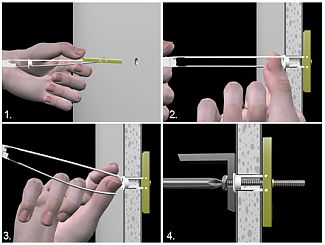
These anchors work by inserting a metal or plastic bolt through a pre-drilled hole. As the screw tightens, the wings open behind the drywall and clamp it firmly in place. This distribution of force prevents pull-out even under significant weight.
Install SnapToggles in Four Steps
- Mark and Level: Use a level to draw a straight line where the shelf bracket will sit.
- Drill the Hole: Use the bit size specified on the package, typically one-half inch for SnapToggles.
- Insert the Anchor: Feed the bolt through the hole until the wings drop behind the drywall.
- Tighten the Screw: Drive the screw until the bracket is flush against the wall, but do not overtighten.
Use at least two toggles per shelf. For long spans, place one near each end and a third in the center for added stability.
Reinforce with a French Cleat System
Build a Hidden Locking System
A French cleat is a two-part interlocking rail. One piece mounts to the wall, and the other attaches to the shelf. When engaged, the shelf slides down onto the wall cleat and locks in place via gravity and friction.
This method works well for floating shelves, heavy kitchen storage, and situations where you need easy removal and reinstallation.
Build and Mount in Five Steps
- Cut the Cleat: Use a one-by-four hardwood board. Cut each piece at a 45-degree angle using a circular saw.
- Attach Wall Cleat: Position one cleat on the wall with the angled edge facing up. Use toggle bolts at both ends and into any available stud.
- Secure Shelf Cleat: Attach the mating piece to the back of the shelf, ensuring the angle matches the wall piece.
- Hang the Shelf: Lift and slide the shelf down so its cleat engages the wall piece.
- Check Level: Adjust if needed before final tightening.
Use oak or maple for durability. The more surface contact between the cleats, the stronger the hold.
Hybrid Approach for Extra Security
If one stud aligns with your shelf, screw the cleat directly into it and use toggles elsewhere for added support. This combination provides maximum stability.
Add Surface-Mounted Backing

Create a Rigid Mounting Surface
When multiple studs are not aligned with your shelf, build a rigid surface across them using wood or plywood. This becomes your new wall for mounting shelves.
Install a Ledger Board
- Find All Studs: Use a stud finder to locate every framing member behind the wall.
- Cut Lumber: Rip a one-by-four or one-by-six pine board to length, spanning between door frames or structural points.
- Screw to Studs: Attach the board horizontally at shelf height using two-and-a-half-inch drywall screws, one per stud.
- Mount Shelf Brackets: Screw L-brackets directly into the wood, not the drywall.
This method supports over 300 lbs and hides irregular stud spacing effectively.
Upgrade with a Plywood Panel
For full-wall shelving like in a pantry or closet, replace a drywall section with three-quarter-inch plywood:
- Cut out drywall between framing members.
- Fit and screw plywood into all accessible studs.
- Paint or finish to match the room.
- Mount shelves directly to the panel.
Avoid Dangerous Bracket Mistakes
Do Not Hang Shelves from Above
A common error is mounting L-brackets above the shelf so the shelf hangs from the screws. This puts all the stress on the fasteners tensile strength, which drywall cannot support for long.
Instead, place brackets under the shelf. Let the horizontal arm support the weight from below. Screws resist shear forces, not pull-out forces.
Even a 50-lb load can slowly loosen screws when suspended improperly. Always let the bracket carry the shelf, not hang it.
Lightweight Options: Adhesive and Tension Systems
Use Command Strips for Light Decor
If your shelf holds less than 15 lbs, like picture frames, candles, or small plants, 3M Command strips offer a no-drill, no-damage option.
Follow these rules for success:
- Clean the wall with isopropyl alcohol and let it dry completely.
- Avoid textured paint, which prevents proper adhesion.
- Press firmly for 30 seconds after placement.
- Wait one hour before loading the shelf.
Each large strip holds up to 16 lbs. For longer shelves, use multiple strips spaced evenly.
This option is renter-friendly. Remove strips with dental floss or fishing line to slice the adhesive cleanly without damaging paint.
Install Tension Shelves Between Walls
For pantries, closets, or corners, tension poles create instant shelving without touching drywall at all.
How to set up:
- Measure floor-to-ceiling height accurately.
- Extend the pole until it fits snugly.
- Twist the upper cap to tighten and lock in place.
- Slide on shelf brackets or platform.
Quality units support up to 75 lbs and adjust in height. This works well for towel racks, spice storage, and linen shelves.
Know the Weight Limits
Do Not Overload Drywall Anchors
Even the best toggle bolt has limits. Here is what different systems can safely hold:
| System | Safe Load (Derated) | Max Recommended Use |
|---|---|---|
| SNAPTOGGLE | 175 to 250 lbs | Heavy floating shelves |
| French Cleat + 3 Anchors | 40 to 50 lbs | Butcher block, kitchen tools |
| Molly Bolt | 20 to 30 lbs | Medium bookshelves |
| Plastic Anchor | 10 to 15 lbs | Light decor |
| Command Strip | 8 to 12 lbs | Photos, small baskets |
Always derate by 50 percent for safety, especially with breakables or in high-traffic areas. A shelf holding a coffee maker, cookbooks, and jars could easily exceed 40 lbs. In that case, use toggles or plywood backing, never plastic anchors alone.
Prep the Wall Properly
Clean and Test Before Installing
A strong bond starts with a clean surface. For anchors, remove dust with a damp cloth and drill pilot holes to correct depth and size. Avoid cracked or patched drywall.
For adhesives, clean with alcohol or mild soap and sand glossy paint lightly for better grip. Never use adhesives on wallpaper or textured walls.
Test anchor strength by pulling gently after installation before adding the shelf and its contents.
When to Avoid No-Stud Mounting
Some Situations Demand Studs
Skip no-stud methods if the shelf will hold TVs, appliances, or fragile art. Also avoid these methods if the wall is plaster, textured, or damaged. High-humidity areas like laundry rooms and long-term permanence requirements also call for stud-based mounting.
In these cases, relocate the shelf to hit at least one stud, use a freestanding unit like a bookcase or ladder shelf, or upgrade the wall with blocking or plywood.
Final Tips for Success
Test, Inspect, and Maintain
Even the best installation can fail over time. Do this monthly:
- Check for loose screws and retighten as needed.
- Look for wall cracks around anchors.
- Retighten tension poles.
- Inspect adhesive bonds for peeling.
To prevent sagging, use three anchors for shelves over 24 inches. Place heavier items closer to the wall rather than on outer edges.
Frequently Asked Questions About Installing Shelves Without Studs
Can I install a heavy shelf without studs?
Yes, you can install heavy shelves without studs using toggle bolts like SNAPTOGGLE, which can hold up to 356 lbs on five-eighths-inch drywall. For the best results, use a French cleat system combined with toggle bolts or install plywood backing secured to available studs.
What is the strongest drywall anchor for shelves?
The SNAPTOGGLE heavy-duty toggle bolt is the strongest drywall anchor, rated up to 356 lbs on five-eighths-inch drywall. TOGGLER plastic wall anchors come second at up to 159 lbs. For heavy applications, combine anchors with a French cleat or plywood backing for added security.
How much weight can a shelf hold without studs?
Weight capacity depends on the method used. Plastic anchors hold 10 to 15 lbs. Toggle bolts hold 50 to 250 lbs depending on type. French cleats with multiple anchors hold 40 to 50 lbs. Plywood backing secured to studs can hold over 300 lbs. Always derate by 50 percent for safety.
Can I use adhesive strips for heavy shelves?
Adhesive strips like Command products are designed for lightweight items only, typically 8 to 16 lbs per strip. They are not suitable for heavy shelves holding books, appliances, or kitchen items. Use toggle bolts, French cleats, or plywood backing for heavier loads.
Is it safe to mount a shelf without finding a stud?
Yes, it is safe when you use the appropriate hardware for your expected load. Hollow-wall anchors, French cleats, and plywood backing all provide secure mounting without studs. Just match your method to the weight of the shelf and its contents, and always err on the side of stronger hardware.
What is the easiest no-stud shelf mounting method?
For the easiest installation, adhesive Command strips require no tools and work well for items under 16 lbs. Tension pole systems also require no drilling and work in closets and pantries. For heavier loads, toggle bolt installation requires a drill but provides much stronger holding power.
Key Takeaways for Installing Shelves Without Studs

You can install a shelf without studs safely and securely when you choose the right method for the load. For light items under 15 lbs, adhesive strips or tension rods work perfectly. For medium to heavy shelves, toggle bolts, French cleats, or wood backing provide long-term strength.
Never rely on drywall alone to support weight. Always use hardware rated above your expected load, derate capacity by 50 percent for safety, and inspect regularly for wear. With these strategies, you can transform any blank wall into functional storage, no framing required.