
If you’re tired of tripping over muddy boots or losing track of your favorite sneakers in a garage pile-up, you’re not alone. A well-designed shoe rack for garage use transforms clutter into order, turning your entryway into a functional mudroom. With constant foot traffic, moisture exposure, and limited space, garages demand smart, durable storage that keeps shoes accessible yet protected. The right system prevents dirt from spreading indoors, extends shoe life, and integrates seamlessly with your family’s routine.
This guide delivers actionable shoe rack ideas for garage environments, combining top commercial picks, DIY builds, and expert-backed organization strategies. You’ll learn how to choose materials that withstand humidity, design zones for daily and seasonal footwear, and install systems that save floor space.
Zone Your Garage Entryway
Create a dedicated shoe storage zone near your interior door to stop mess at the source. This drop zone reduces tracked-in dirt and streamlines daily routines.
Design a Functional Drop Zone
Place your shoe rack within arm’s reach of the house entry. Pair it with coat hooks, a bench, or cubbies to form a complete transition area.
Position the rack on the right or left side of the door jamb for easy access. Include a water-resistant mat or tray underneath to catch mud, snowmelt, or garden debris. Add a small trash bin for discarded boot liners or dirty insoles.
Separate Daily, Seasonal, and Dirty Shoes
Not all footwear needs the same treatment. Use zoning to keep things efficient.
Store daily wear like house slippers, work shoes, and school sneakers on open shelves or low cubbies at eye to waist level. Keep seasonal items like snow boots, rain boots, or camping shoes in labeled bins or overhead storage on high shelves. Allow wet or muddy shoes to dry on perforated trays or heated racks at floor level before storing them away.
Integrate with a Mini-Mudroom
Turn your garage corner into a fully functional mudroom by combining a bench for seated shoe changes, hooks for backpacks and outerwear, cubby bins for individual family members, and lighting for early-morning exits. This setup works especially well in homes without formal mudrooms.
Choose the Right Material for Durability
Garages expose storage to moisture, dust, and temperature swings. The wrong material warps, rusts, or traps odors fast.
Use Metal for Strength and Airflow
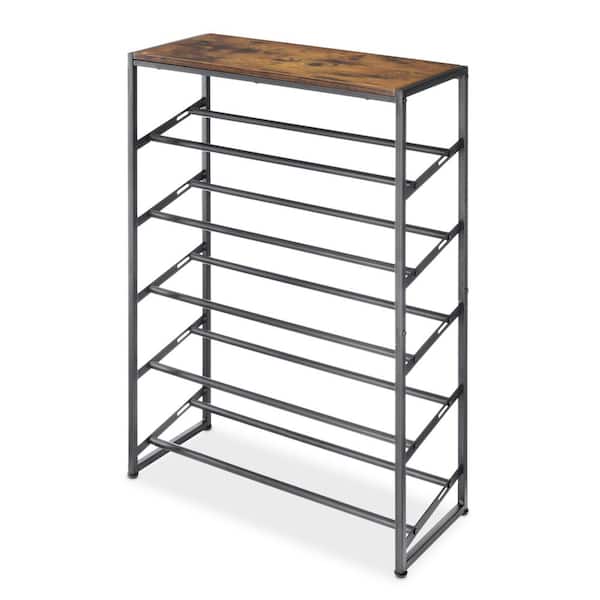
Metal shoe racks, especially powder-coated steel, resist moisture and support heavy boots. Top models include the ROJASOP 8-Tier and HOOBRO 5-Tier Mesh Shelf. Metal racks are durable and easy to wipe clean, and they allow airflow to reduce odor. The drawbacks are that they can dent and feel cold to touch in winter. Anchor freestanding units to wall studs to prevent tipping.
Opt for Sealed Wood or Laminate
Properly finished wood offers strength and style, but only if sealed against humidity. Use spar urethane or polyurethane topcoats on DIY builds. Avoid untreated plywood or particleboard because they swell in damp conditions. This material is ideal for custom cabinetry or built-in units.
Skip Fabric-Covered and Cardboard Options
Fabric-covered racks may look tidy but absorb odors and are hard to clean. Cardboard boxes degrade quickly in garages. Replace fabric bins with clear plastic containers for better protection. Use stackable bins like Kuetect or SEE SPRING foldable boxes for seasonal rotation.
Install Space-Saving Vertical Racks
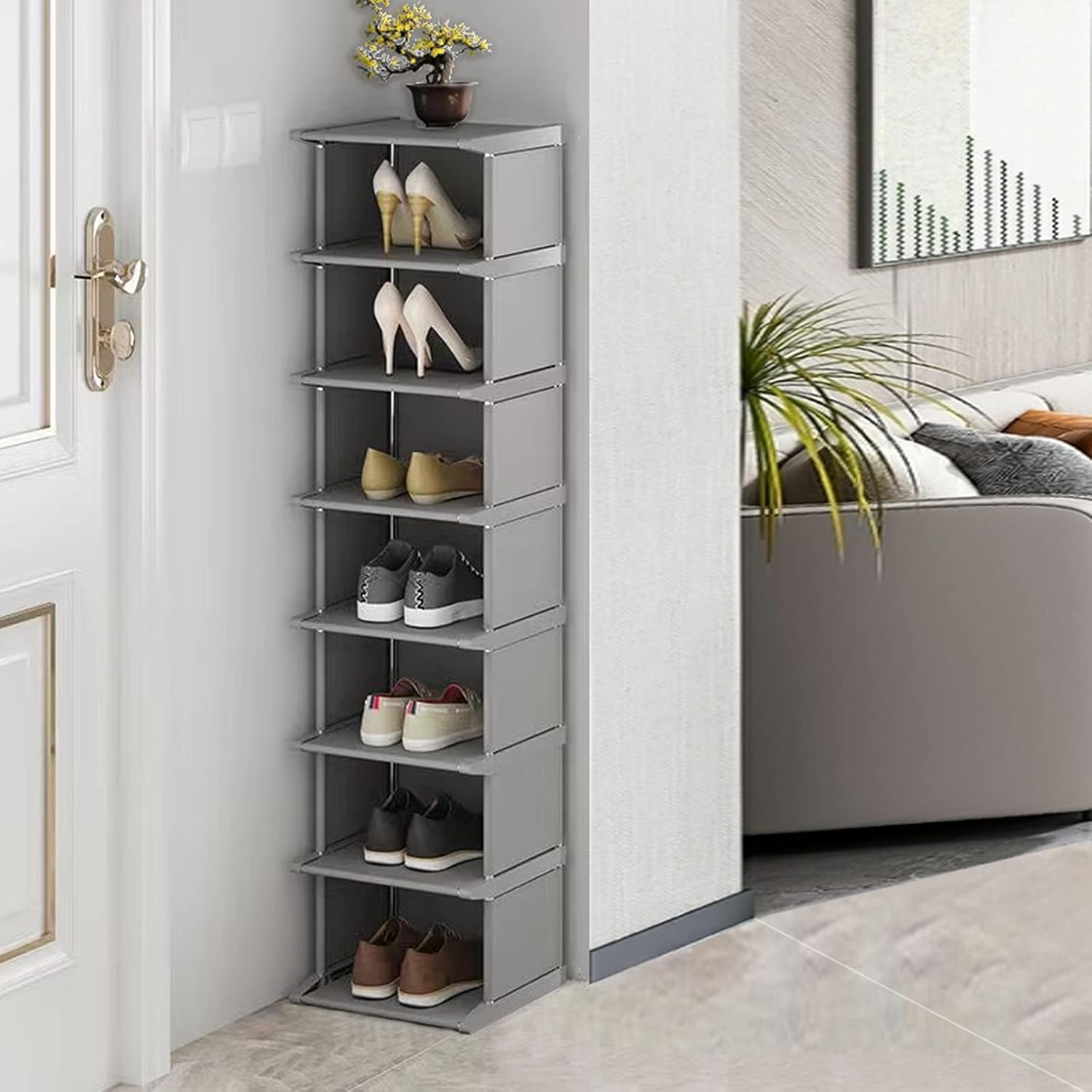
Maximize garage height while keeping floors clear for vehicles and gear.
Use Tall, Narrow Shoe Towers
Vertical racks fit in corners or beside doors without blocking pathways. The Kitsure 10-Tier Rack measures 32 inches wide by 12 inches deep and holds up to 40 pairs. The LANTEFUL 10-Tier Tower has a slim profile ideal for tight spaces. The SMILHELTD 8-Tier Wide Rack works best for large families with its 64-pair capacity. Place these against a wall and anchor with L-brackets to prevent tipping.
Mount Shelves at Multiple Heights
Adjust shelf spacing to fit different shoe types. Use 7 to 8 inches between shelves for sneakers and flats. Use 10 to 12 inches for hiking boots or cleats. Leave top shelves empty for airflow or hat storage. Consider IKEA Jonaxel or Algot systems for modular, wall-mounted flexibility.
Build a DIY Garage Shoe Rack Under $70
Customize size, finish, and layout to match your garage’s exact needs with a budget-friendly DIY build.
Gather Materials and Tools
For materials, you will need 1×2 lumber for the frame, 3/4-inch plywood or boards for shelves, exterior-grade deck screws, waterproof wood glue, sandpaper ranging from 60 to 240 grit, pre-stain conditioner, stain like Golden Oak, and polyurethane top coat.
For tools, gather a circular saw, drill or driver, measuring tape, and clamps if available.
Assemble Frame and Shelves
Cut 1×2 lumber to your desired height and width, such as 30 inches wide by 60 inches tall. Build a rectangular frame using angled pilot holes and wood glue for strong joints. Cut shelves to fit inside the frame, then sand progressively from 60 to 240 grit. Apply pre-stain conditioner, then stain, and let it dry for 24 hours. Attach shelves with screws driven through the frame into shelf edges.
Finish for Garage Durability
Seal all surfaces with 2 to 3 coats of polyurethane to resist moisture. Use scrap wood risers during drying to prevent sticking. Anchor the finished rack to the wall with brackets. Add a bottom drip tray or rubber mat to catch water and dirt.
Use Enclosed Cabinets for Dust Protection
Keep dress shoes, collectibles, or off-season footwear clean and pest-free with enclosed storage.
Install Shoe Storage Cabinets
Look for models with full doors and tight seals. The 54-Pair Shoe Cabinet features two 9-tier columns with dust-proof enclosure. Rubbermaid FastTrack Garage Cabinets include shoe zones at the base. Closet America Pull-Out Drawers offer angled display with full extension. These work best for urban professionals, sneaker collectors, or garages with high dust levels.
Prevent Pests and Moisture Buildup
Store shoes in sealed clear bins inside cabinets. Add silica gel packs or activated charcoal bags to absorb moisture. Avoid cardboard because rodents chew it and it holds humidity. Label bins with shoe type and season for quick access.
Add Ventilation for Wet and Smelly Shoes
Prevent mold, mildew, and odors with airflow and drying features.
Use Open Shelving or Mesh Backs
Closed cabinets trap moisture. Instead, opt for metal racks with perforated or mesh shelves. Use DIY wood racks with gaps between slats. Choose wall-mounted units that allow air circulation behind shoes.
Install a Boot Drying Rack
For cold climates, integrate a heated boot dryer or passive rack with drip tray. Place it near the door for immediate post-walk use. Let boots dry fully before returning to storage. Use bamboo charcoal bags inside boots overnight to neutralize odors. Never seal damp shoes in plastic bins, as this breeds mildew.
Maximize Overlooked Spaces
Use vertical, overhead, and under-bench areas to free up floor space.
Mount Racks High on Walls
Install floor-to-ceiling shelving to use full garage height. Store infrequently used shoes like ski boots on upper shelves. Add LED strip lights under shelves for visibility. Use motion-sensor lighting in dark corners.
Use Overhead Storage for Seasonal Pairs
Hang ceiling-mounted bins or mesh bags from joists. This is ideal for winter boots or camping shoes. It requires a step stool, so it’s best for adult access. Must be securely anchored to ceiling joists, not drywall.
Build Under-Bench Storage
Combine seating with hidden shoe cubbies. Construct a low bench with flip-up lids or sliding drawers. Store everyday shoes out of sight but within reach. Line the interior with non-slip matting to prevent shifting.
Optimize for Families and Kids
Make shoe storage easy for everyone, especially little ones.
Use Low, Labeled Bins
Place child-sized shoe bins at knee-to-waist height. Use color-coded bins or picture labels for pre-readers. Choose clear plastic so kids can see their shoes. Keep extras near the bench for quick changes.
Add a Bench for Safe Changes
A simple seat prevents falls when putting on shoes. Use a sturdy wooden or metal bench. Store shoes underneath or in cubbies beside it. Include footrests for younger children. One user noted that adding a bench made shoe time 10 times faster with three kids.
Protect Collectible and Dress Shoes
Sneakerheads and professionals need extra care for delicate footwear.
Store in Clear Stackable Boxes
Use Kuetect or similar clear plastic bins. See contents without opening. Protect from dust, UV light, and pests. Stack vertically to save space. Label with permanent marker or tags. This is ideal for limited-edition sneakers, dress shoes, or formal wear.
Keep in Climate-Controlled Zones
Avoid placing collectibles near garage doors with temperature swings, water heaters with heat exposure, or utility sinks with humidity. If possible, store in a temperature-stable section of the garage or basement.
Prevent Common Storage Mistakes
Avoid pitfalls that reduce usability and damage shoes.
Do Not Overstuff the Rack
Cramming shoes reduces airflow and makes retrieval hard. Leave 1 to 2 inches between pairs for bulky footwear. Rotate seasonal shoes to maintain space. Use vertical stacking only for flat shoes.
Always Anchor Freestanding Units
Unsecured racks can tip, especially in homes with kids or pets. Use L-brackets and wall anchors to secure to studs. Test stability by gently pushing the top. Avoid placing near high-traffic swing zones.
Never Store Wet Shoes in Closed Cabinets
Moisture leads to mold, odors, and material breakdown. Air-dry wet shoes for 24 to 48 hours first. Use shoe trees or crumpled paper to maintain shape. Place in open racks or ventilated cubbies until dry.
Final Recommendations by Use Case
Match your solution to your lifestyle and garage layout.
For small garages with tight space, choose a wall-mounted IKEA Algot with shoe shelves. For large families with many shoes, the SMILHELTD 8-tier wide rack or DIY multi-level unit works best. For mudroom conversion, use a cabinet with bench, hooks, and enclosed shoe storage. Sneaker collectors should use clear stackable bins with labeling. Budget DIYers can build a custom wood rack for $30 to $70 in materials. For snowy or wet climates, choose an open metal rack with drip tray or heated boot dryer. In pest-prone areas, use sealed plastic cabinets or bins with tight lids. For luxury custom garages, install pull-out shoe drawers like those from Closet America. Renters or those with temporary setups need a freestanding rack with non-slip base. For a minimalist look, choose low-profile wall shelf or under-bench storage.
Frequently Asked Questions About Shoe Rack Ideas for Garage
What is the best material for garage shoe storage?
Metal and sealed wood rank highest for garage durability. Powder-coated steel resists moisture and supports heavy boots. Properly finished wood with polyurethane topcoats withstands humidity. Avoid untreated wood, particleboard, fabric-covered racks, and cardboard boxes.
How do I organize shoes in a small garage?
Maximize vertical space with tall, narrow shoe towers. Use wall-mounted systems like IKEA Algot. Place racks in corners or beside doors. Separate daily wear from seasonal items. Use clear bins for visibility.
Should I buy or build a shoe rack for my garage?
Buying works well for immediate needs, with options ranging from $40 for basic metal racks to $150 plus for custom pull-out drawers. Building a DIY rack costs $30 to $70 in materials and offers customization to your exact dimensions. DIY builds last 10 or more years with proper finishing.
How do I prevent odors in garage shoe storage?
Allow wet shoes to air dry for 24 to 48 hours before storing. Use open shelving or mesh backs for airflow. Place bamboo charcoal bags or silica gel packs inside enclosed cabinets. Avoid sealing damp shoes in closed spaces.
Can I convert my garage entryway into a mudroom?
Yes, combine a shoe rack with a bench, coat hooks, and cubby bins. Position near the interior door. Add a water-resistant mat for wet footwear. Include lighting for visibility. This works especially well in homes without formal mudrooms.
Key Takeaways for Garage Shoe Storage
The best shoe rack ideas for garage environments prioritize three things: durability against moisture and temperature changes, smart zoning that separates daily wear from seasonal items, and proper ventilation to prevent odors and mold. Whether you choose a commercial product like the Kitsure 10-Tier Rack, build a custom DIY unit, or install wall-mounted IKEA Algot shelving, anchor all freestanding units to wall studs for safety. Use clear plastic bins for collectibles and seasonal footwear, and always allow wet shoes to dry before returning them to storage. With the right system, your garage becomes a clean, organized gateway instead of a shoe graveyard.


