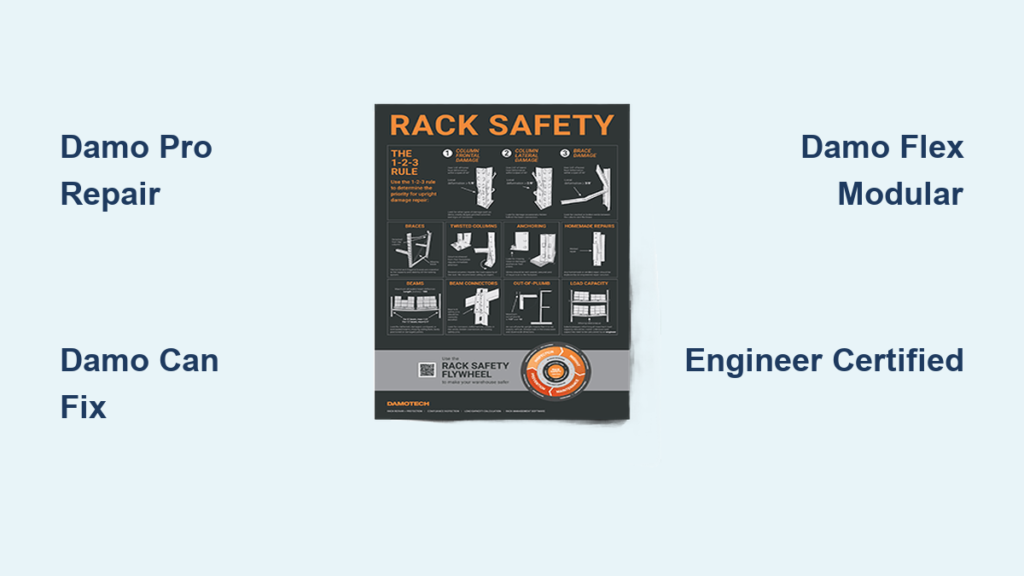

A forklift bumps into a rack column. A beam sags under uneven weight. A pallet shifts and falls. These small incidents happen daily in warehouses, but left unchecked, they can lead to catastrophic rack collapse, injuries, or regulatory penalties. Learning how to inspect warehouse racks isn’t just a safety formality—it’s your first line of defense against structural failure, downtime, and costly repairs.
This guide walks you through the complete process to inspect warehouse racks based on OSHA guidelines, ANSI/RMI MH16.1 standards, and insights from leading inspection firms. You’ll learn which components to check, how often inspections should be performed, who should carry them out, and exactly what to do when damage is found.
Understanding OSHA and ANSI/RMI Compliance Requirements
OSHA does not mandate a fixed inspection frequency, but the General Duty Clause requires employers to maintain a workplace free from recognized hazards, including structurally sound storage systems. This means you must address visible damage and maintain documentation of your inspection program.
The ANSI/RMI MH16.1 standard is the primary technical guideline for industrial steel storage racks. Under this standard, rack owners must ensure ongoing structural integrity through proper use, operation, and maintenance. Any visibly damaged section must be immediately unloaded until assessed and repaired by a qualified rack design engineer.
Key Compliance Mandates
The rack owner bears responsibility for maintaining structural integrity. All repairs must be reviewed and supervised by a qualified rack design engineer to account for static, dynamic, and seismic loads. Replaced components must meet or exceed the strength of original undamaged parts. Any reconfiguration or alteration requires approval from a licensed professional engineer.
Failure to inspect or address visible damage may result in OSHA citations, fines, or enforcement actions under the General Duty Clause.
Determining the Right Inspection Frequency
How often you inspect depends on traffic, risk, and usage intensity. Low-throughput warehouses storing archival or seasonal items need only an annual inspection. High-throughput facilities with daily multi-shift forklift operations require quarterly inspections.
Trigger-Based Inspections
Additional formal inspections should occur immediately after rack relocation or reconfiguration, visible forklift impact or structural deformation, prior to adding new loads or changing load profiles, after any rack collapse or near-miss incident, and when introducing seasonal or temporary workers.
No warehouse should go longer than 12 months without a formal inspection. High-risk facilities benefit from quarterly or even monthly assessments.
Inspecting Uprights for Structural Damage

Uprights are the backbone of your rack system and the most vulnerable to impact. Even minor dents or bends compromise load-bearing integrity and increase collapse risk.
Checking for Dents, Bends, and Deflection
Walk each aisle and scan every upright column from base to top. Look for visible dents, kinks, or crushing, especially at lower levels where forklifts strike. Check for twisting or buckling, which indicates lateral force or overload. Inspect for rips, tears, or punctures in the steel, and watch for paint chipping or rust, which may indicate repeated stress or environmental corrosion.
Use a measuring tape to assess deflection. Any bend exceeding half an inch per 10 feet of height is a red flag. Per ANSI/RMI standards, this degree of deformation means the upright can no longer safely carry its rated load.
Identifying Impact Patterns
Multiple dents at the same height across bays suggest recurring operator error, such as lifting too high or turning too close. These patterns reveal systemic training gaps that need addressing.
Tagging and Offloading Damaged Uprights
If you find severe bending exceeding half an inch per 10 feet, cracked welds or torn metal, or twisted columns, assign a Red tag, immediately unload the bay, and bar off the area. Do not allow reloading until a qualified inspector or engineer evaluates and approves repairs.
Evaluating Bracing for Stability

Horizontal and diagonal braces keep the rack system rigid and resistant to sway, seismic forces, and forklift impacts. Missing or damaged bracing turns a stable structure into a wobbling hazard.
Looking for Missing or Bent Braces
Walk through each aisle and verify all horizontal and diagonal braces are present with no visible dents, kinks, or bends. Check that connections to uprights are tight and undamaged, and inspect welds for cracking.
Diagonal braces are under tension, so even small bends reduce their effectiveness. A missing brace, especially in a high bay or seismic zone, significantly increases collapse risk.
Checking Fastener Integrity
Inspect bolted or clipped connections. If braces are loose, rattling, or partially detached, mark as Yellow for monitoring and schedule replacement or reattachment. If multiple braces are compromised in one frame, upgrade to Red.
Never remove braces to accommodate oversized loads. This violates ANSI/RMI standards and voids engineering compliance.
Examining Load Beams for Deformation
Beams support every pallet. When they sag, twist, or lose their locks, they become the weakest link in your storage system.
Spotting Sagging and Permanent Deflection
With the rack unloaded, beams should appear perfectly straight. Look for visible sagging, especially in long spans of 96 inches or more. Check for twisting or warping, which indicates overloading or point loading, and watch for indentations from repeated forklift contact.
Even slight deformation reduces beam strength and shifts stress to uprights.
Inspecting Beam Locks and Fasteners
Check every beam-end connection. Snap pins, beam locks, or clips must be present and fully engaged. Missing or loose fasteners are a top-five issue found in inspections. Remove any welded repairs immediately, as they are unauthorized and dangerous.
Workers often remove beam locks during reconfiguration and never reinstall them. This creates dislodgement risk during minor impacts.
Replacing or Repairing Damaged Beams
Slightly dented or loose beams get a Yellow tag with scheduled repair. Bent, twisted, or missing locks require a Red tag, offloading, and lockout. Always replace with components that meet or exceed original strength. Never substitute with mismatched beams.
Reviewing Pallet Condition and Load Placement
Pallets are often overlooked, but damaged or poorly loaded pallets cause shifting, falling, and point loading that damages racks.
Identifying Damaged Pallets
Look for cracked, broken, or missing boards and stringers. Check for protruding nails or splinters. Watch for rot, chemical stains, or warping. Remove outdated or unreadable labels.
Remove damaged pallets from circulation immediately.
Checking Load Distribution
Ensure pallets span both front and rear beams with no overhang exceeding 3 inches per side. Avoid unbalanced or lopsided stacking and never allow point loading, such as metal coils resting on one edge.
Train operators to inspect pallets before loading. A pre-load checklist prevents rack stress and product loss.
Verifying Base Plates and Anchors Are Secure
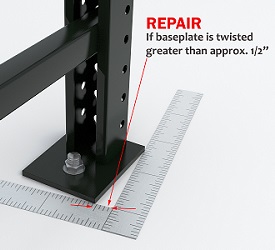
Anchors are the foundation of rack stability. Unanchored racks can topple like dominoes when hit, a leading cause of catastrophic collapse.
Looking for Missing or Damaged Anchors
Inspect every base plate. At least one anchor bolt per base plate is required per RMI standards. Check for loose, bent, or broken bolts. Look for cracked or warped base plates and any gap between plate and floor, which indicates uplift or movement.
Use a flashlight to check under racks where debris hides damage.
Prioritizing High-Risk Areas
End-of-aisle racks and seismic zones are most vulnerable. Missing anchors here warrant an immediate Red tag.
Install guard rails or bollards at aisle ends to protect anchors from forklift strikes.
Assessing Safety Bars and Decking
Safety bars prevent pallets from falling through rack openings, especially above walkways.
Replacing Missing or Damaged Bars
Check for missing bars between beams. Look for loose, bent, or corroded supports. Verify proper installation, ensuring bars are clipped or bolted securely.
OSHA and ANSI require fall protection, such as mesh, nets, or bars, wherever employees walk beneath loaded racks.
Retrofitting High-Risk Zones
Even if not required, install safety bars in pedestrian aisles, loading docks, and forklift crossover points. This prevents falling-object injuries and improves compliance.
Reviewing Signage and Documentation
Without clear load ratings and configuration records, overloading becomes inevitable.
Checking Load Capacity Plaques
Ensure plaques are visible and legible at each bay. Verify ratings match actual loads and confirm no missing or altered labels. If plaques are missing, apply a Yellow tag until replaced.
Verifying LARC Drawings
LARC drawings show approved beam levels, load distribution, and maximum weight per bay. Update after any reconfiguration and keep copies in a central safety binder.
Using racks beyond rated capacity violates ANSI/RMI and increases liability.
Inspecting Floors and Aisles
The floor supports everything. Cracks, debris, or poor lighting increase collision risk and undermine anchoring.
Inspecting for Cracks and Spalling
Check near base plates for cracks or crumbling concrete. Look for settlement or shifting, and watch for oil, water, or debris in aisles.
Repair cracks promptly to maintain anchor integrity.
Ensuring Safe Aisle Conditions
Aisles must allow full forklift clearance, typically 6 to 12 inches on each side. Lighting should be bright and even with no obstructions or tripping hazards.
Narrow, dark, or cluttered aisles contribute to 90% of forklift-rack collisions.
Using the Color-Coded Damage Rating System
A standardized tagging system prioritizes actions and communicates risk across your team.
Understanding Each Rating Level
Green means no issues and the rack is safe and compliant. Continue normal operations. Yellow indicates caution with minor damage like small dents or loose clips. Monitor and schedule repair. Do not ignore Yellow, as it can become Red. Red means Code Red with severe damage like bent uprights or missing anchors. Immediately unload, bar off the area, and do not reload until engineer-approved repair.
Never bypass a Red tag. Doing so risks collapse, injury, and OSHA citations.
Responding to Damage Findings
Finding damage is only half the battle. Your response determines safety and compliance.
Offloading and Locking Out Red Zones
First, unload product immediately. Second, use safety tape, cones, or fencing to block access. Third, document damage with photos and notes. Fourth, contact a qualified inspector or engineer.
Never attempt in-house repairs without engineer oversight. Unauthorized fixes void warranties and insurance.
Scheduling Repairs or Replacement
Work with a provider who offers engineer-reviewed repair plans, RMI-compliant components, and as-built documentation. Rack repair is often more cost-effective than full replacement, especially for localized upright damage.
Choosing Between In-House and Third-Party Inspectors
While staff can do daily checks, third-party inspections are essential for objectivity and compliance.
Why Third-Party Inspectors Are Better
Third-party inspectors have lower bias compared to in-house teams who may feel familiarization pressure. They bring RMI-trained expertise rather than varying skill levels. They provide photo-heavy, engineer-reviewed reporting rather than basic notes. Their reports receive preferred acceptance from OSHA and insurers.
Qualifications to Look For
Look for RMI certification and experience with your rack type, whether structural or roll-formed. Choose providers who offer location-specific drawings, engineer-approved repair plans, and auditable reports.
Reputable providers include REB Storage Systems International, Mazzella Companies, and USA Industries.
Preventing Damage with Proactive Measures
Inspection finds problems, but prevention stops them before they start.
Training Forklift Operators
Ninety percent of rack damage starts with operator error. Conduct regular training sessions focusing on clearance, load height, and turning radius. Review recurring impact zones to address specific problems.
Implementing Daily Checklists
Use a simple form covering uprights, beams, braces, anchors, pallets, and safety bars. Assign checks to supervisors, taking only 5 to 10 minutes per shift.
Upgrading Protection Systems
Install post protectors on all vulnerable uprights. Add guard rails at aisle ends. Use wire mesh decking over walkways. Small investments prevent costly repairs and downtime.
Key Takeaways for Effective Rack Inspections
Inspecting a warehouse rack is not a one-time task. It requires daily in-house visual checks, quarterly or annual professional inspections, and immediate response to any damage findings. Focus on the nine core components: uprights, braces, beams, pallets, base plates, safety bars, signage, floors, and protective guarding.
Use the color-coded system to prioritize actions. Never bypass a Red tag. Document everything and follow up on repairs. Combine daily vigilance with third-party expertise to create a robust safety culture.
Start today. Walk your aisles, tag any damage, and schedule a professional inspection. Because when it comes to rack safety, the only thing worse than finding damage is missing it.
Frequently Asked Questions About Warehouse Rack Inspections
How often should a warehouse rack be inspected?
Low-throughput warehouses need annual inspections at minimum. High-throughput facilities with daily forklift traffic require quarterly inspections. No warehouse should go longer than 12 months without a formal inspection.
Who is qualified to inspect warehouse racks?
A competent person must have industry-specific training, hands-on experience with storage rack systems, and knowledge of RMI guidelines, structural engineering principles, and load dynamics. Third-party inspectors with RMI certification provide the most objective and comprehensive assessments.
What is the ANSI/RMI MH16.1 standard?
ANSI/RMI MH16.1 is the primary technical guideline for industrial steel storage racks. It mandates that rack owners ensure ongoing structural integrity, requires immediate unloading of damaged sections, and specifies that all repairs must be reviewed by a qualified rack design engineer.
What should I do if I find Red-tagged damage?
Immediately unload the affected rack section, bar off the area to prevent access, document the damage with photos, and contact a qualified rack inspector or engineer. Do not return the rack to service until a structural assessment is completed and repairs are approved.
What causes most warehouse rack damage?
Over 90% of rack damage is caused by forklift impacts. Common issues include upright dents from collisions, missing beam locks, damaged anchors, and overloaded beams. Operator training and protective guarding are the best defenses.