
A push back rack jam can bring warehouse operations to a sudden halt. When a pallet becomes stuck deep within a high-density storage lane, the temptation is to force it free with a forklift or reach in from an unstable platform. These actions risk structural failure, serious injury, or even fatalities. Understanding how to prevent, diagnose, and resolve push back rack jams safely is critical for both productivity and worker safety.
Every year, unsafe rack access leads to preventable accidents that cost facilities over $1.2 million per incident. Most jams can be avoided with proper procedures. When they do occur, engineered solutions like The MARC offer safe, compliant retrieval without risking worker safety. In this guide, you will learn the root causes of jams, how to prevent them, and the only safe way to clear a blockage when it happens.
Identify Common Push Back Rack Jam Causes
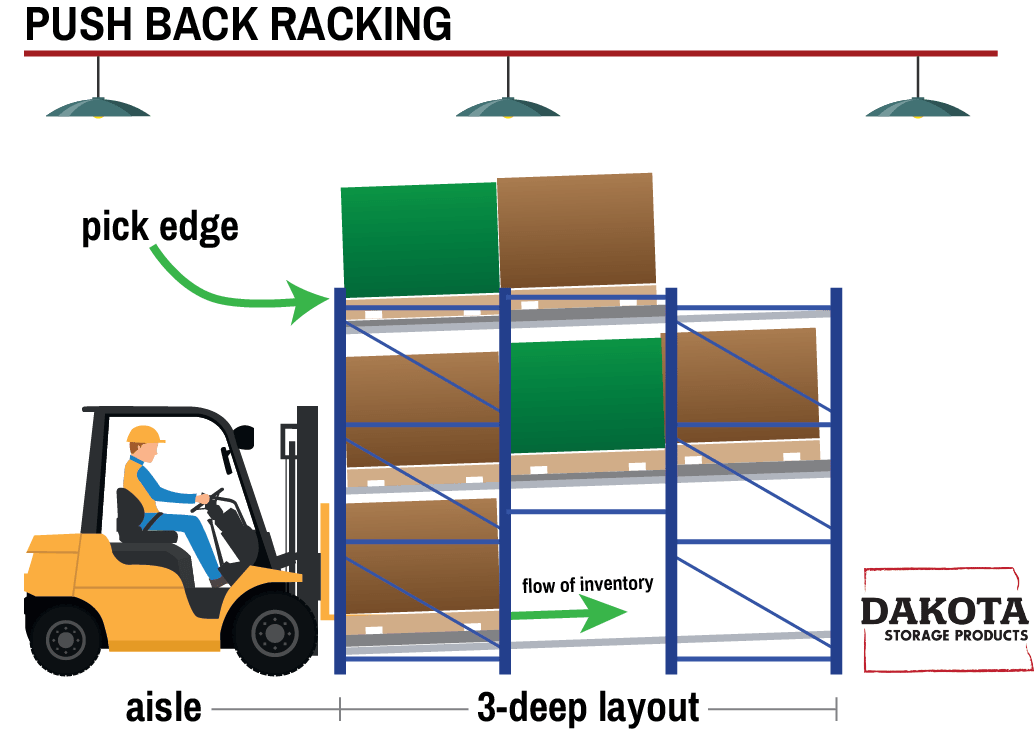
Understanding what leads to a jam is the first step in preventing and resolving it. Most issues stem from operational errors or equipment incompatibility.
Misaligned Forklift Insertions
Placing a pallet off-center is one of the top causes of jams. If the forklift is not squared to the lane opening, the pallet enters at an angle, skewing carts and binding wheels against rails. Watch for pallets that appear tilted or shifted sideways after placement. Catching this early takes 5 to 15 minutes to fix, but cascading jams take much longer to resolve.
Pro tip: Always position your forklift directly in front of the rack lane. Use floor markings or laser guides if needed to ensure proper alignment.
Damaged or Non-Standard Pallets
Using warped, cracked, or oversized pallets disrupts smooth cart movement. Broken bottom boards can catch on rails, while exposed nails snag components. A common mistake is allowing mixed pallet types during peak seasons. The result is increased friction, uneven weight distribution, and eventual jamming.
Expert note: Only use pallets matching the exact size and configuration specified by the rack manufacturer.
Debris and Environmental Buildup
Dirt, plastic wrap, wood fragments, or ice in cold storage environments accumulate in rail channels, slowing or stopping cart motion. Facilities with frequent packaging changes or outdoor exposure face higher risks. Watch for a gradual reduction in cart travel distance over time, as this signals debris buildup.
Prevention: Schedule weekly rail cleaning using non-metallic brushes to avoid scratching surfaces.
Recognize Unsafe Jam Clearance Attempts

Trying to force a jam free without proper tools endangers workers and infrastructure. Avoid these dangerous practices.
Never Use Forklifts to Pry Loads
Applying lateral force with a forklift may dislodge the pallet, but it also stresses upright frames and beam connections. The consequence is structural deformation or collapse of adjacent lanes. This practice violates OSHA powered industrial truck and fall protection standards.
Warning: Do not attempt to nudge stuck loads. The sudden release can cause flying debris or falling objects.
No Standing on Beams or Mesh
Workers stepping onto rack beams or safety mesh to manually push a pallet create an extreme fall hazard. Mesh is not rated for personnel weight, and beams offer no fall protection. Falls from height are a leading cause of warehouse fatalities.
Rule of thumb: If the jam requires reaching above shoulder height, do not attempt manual removal.
Avoid Improvised Platforms
Laying pallets across beams as walkways is strictly prohibited under RMI and OSHA guidelines. These platforms can shift or collapse without warning, creating an extremely high risk level.
Apply Safe Loading Best Practices
Most jams are preventable. Follow these steps every time you load a push back lane.
Align Forklift Squarely to Lane
Position the truck so forks are perfectly parallel to the rack opening. Use alignment mirrors or floor tape to guide positioning. This ensures straight-line insertion and reduces cart skew.
Lift Load 3–4 Inches Above Top Cart
Raise the pallet slightly higher than the resting cart before insertion. This prevents scraping or bumping during placement. Use mast tilt control to maintain a level load.
Match Rail Pitch on Inclined Systems
Tilt forks upward slightly to match the rail incline, which is typically 5 to 6 degrees. This facilitates smooth engagement and prevents front-edge binding. Some systems include visual pitch indicators on uprights.
Insert and Lower Slowly
Gently place the pallet onto the cart. Do not drop or slam it. Shock loading can displace carts or damage wheel bearings. The result is smoother operation and longer system life.
Retract Forks at Same Angle
Remove forks using the same tilt and height used for insertion. A common error is tilting down too soon, which catches pallet edges. Re-enter slightly and adjust angle before pulling out.
Conduct Routine System Inspections
Preventive maintenance catches issues before they become jams.
Daily Visual Checks
Before each shift, inspect pallet alignment in all lanes, presence of debris or damage, and obvious rail dents or cart misalignment. This takes less than 5 minutes per aisle. Operators or supervisors should perform these checks.
Weekly Functional Testing
Test cart movement by manually pushing empty lanes. Look for sticking points, squeaking wheels, or uneven roll-back. Clean rails or tag for repair if resistance is felt.
Monthly Detailed Inspection
Trained personnel should check wheel condition and axle integrity, rail straightness and bolt tightness, beam-to-upright connections, and load placard accuracy. Document findings and corrective actions taken.
Annual Professional Audit
Hire a qualified inspector to perform structural assessment per RMI guidelines. This includes deflection tests, load verification, and corrosion checks. The outcome confirms ongoing compliance and safety.
Deploy The MARC for Safe Retrieval
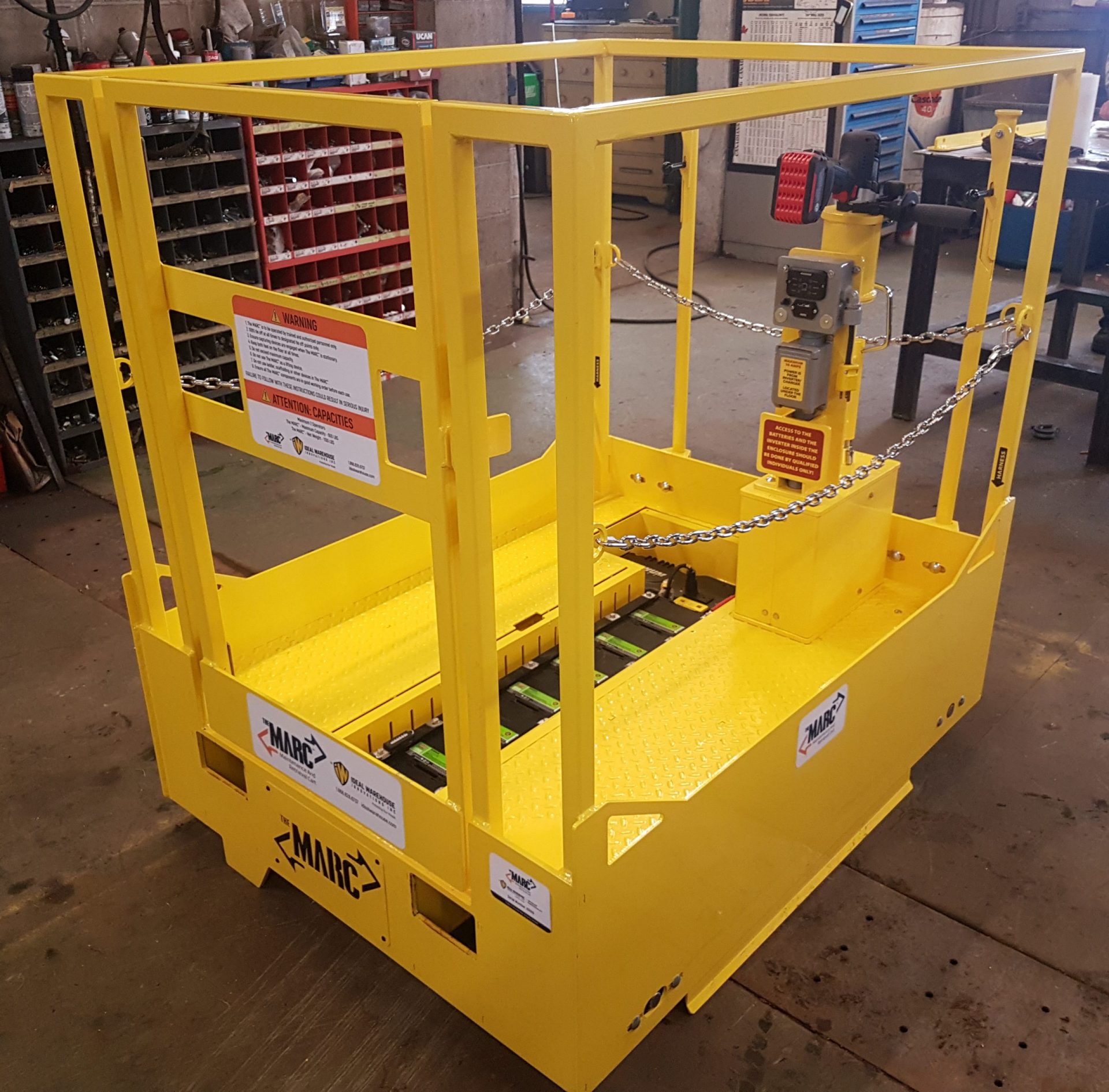
When a jam occurs, The MARC (Maintenance and Retrieval Cart) is the only engineered solution designed for safe access deep within push back racks.
Why The MARC Eliminates Risk
Standard methods like using forklift cages or man baskets are unstable and non-compliant. The MARC attaches directly to the rack structure, providing a stable, OSHA-compliant platform. No stuck pallet is worth a million-dollar accident.
Fact: The MARC was developed by Ideal Warehouse Innovations Inc. specifically for high-density storage systems.
Key Safety Features
The MARC includes four-corner engineered anchor points that securely fasten the unit to uprights, preventing tipping or shifting during use. The 42-inch high safety rail with latching gate meets OSHA guardrail standards and keeps workers protected at height. The unique benefit is the latching gate, which ensures continuous fall protection during entry and exit. The removable canopy allows overhead access for lifting jammed loads while maintaining side protection. Each model is custom-built for your system, not one-size-fits-all.
Compliance: The MARC supports ANSI, RMI, and OSHA requirements for fall protection and rack safety.
Use The MARC in Real Jam Scenarios
See how this solution resolves common jam situations safely.
Free Frozen Carts in Cold Storage
In a -20°C freezer warehouse, ice buildup binds carts after weeks of storage. A worker once tried to chip ice from a forklift platform and nearly fell. The correct action is to deploy The MARC and anchor securely, use non-metallic tools to break up ice, and resume normal cart movement without structural stress. The jam clears in 20 minutes with no downtime and no risk.
Remove Pallet with Protruding Nail
A damaged pallet catches on a cart rail mid-lane. A forklift nudging it causes the adjacent lane to shift. The safe fix is to install The MARC at the correct bay, have the worker enter the platform and secure a harness, then cut the nail flush and reposition the pallet using hand tools. The outcome is no injuries, no damage, and the system back online quickly.
Correct Repeated Jams from Mixed Pallets
Multiple jams occur during holiday rush due to non-standard pallets. The root cause is operations bypassing pallet specs under pressure. The long-term fix is to standardize pallet inventory, train staff on RMI Dos and Don ts, and keep The MARC on standby for emergencies. The impact is a 78% reduction in jams within six months.
Choose Compatible MARC Models
The right model depends on your storage system type.
Push-Back Racking Version
This model is designed for nested cart systems with inclined rails. Customization matches cart depth, load capacity, and rail pitch.
Pallet Flow and Double-Deep Options
These models are also available for gravity flow lanes and deep-reach applications. The benefit is the same safety features, adapted to system mechanics.
Radio Shuttle Compatibility
This supports motorized shuttle environments where jams can disable entire lanes. It works without modifying shuttle tracks.
Note: All models require professional installation per manufacturer specs.
Maintain System Longevity
Keep your push back rack running smoothly with consistent care.
Clean Rails Regularly
Use soft brushes or air blowers to remove dust and debris. In cold storage, apply food-grade anti-icing spray in freezer zones.
Replace Worn Components Early
Check for flat or seized cart wheels, bent rails or loose bolts, and corroded fasteners in humid environments. Replace parts with OEM components only.
Enforce Pallet Standards
Create a pallet inspection checklist that includes no broken boards, no warping or twisting, and no exposed nails or screws. Policy: reject non-conforming pallets at receiving.
Invest in Safety and Efficiency
A momentary jam does not have to become a major incident. By combining proper procedures with the right tools, you protect both people and productivity.
Training Reduces Jams
Educate operators on correct loading techniques, pallet compatibility rules, and jam reporting protocols. The outcome is fewer jams and faster response when they occur.
The MARC Pays for Itself
Consider the cost. Average downtime is $5,000 to $10,000 per day. Average injury claim exceeds $100,000. One fatality costs $1.2 million. Deploying The MARC eliminates high-risk workarounds and reduces insurance premiums.
Quote availability: Contact authorized distributors in North America and select international markets.
Key Takeaways for Resolving Push Back Rack Jams
A push back rack jam does not have to mean danger or downtime. Follow these three principles. First, prevent jams with proper loading, pallet control, and inspections. Second, protect workers by banning unsafe access methods like forklift prying or standing on rack beams. Third, resolve jams safely using engineered solutions like The MARC.
By treating every jam as a safety-critical event, your facility maintains efficiency while ensuring compliance and protecting lives. Combine proper operational discipline with purpose-built safety technology to maintain the efficiency of push back racking while ensuring worker safety and regulatory compliance.
For more information, visit Ideal Warehouse Innovations or call 1-866-828-6737 in North America.
Frequently Asked Questions About Push Back Rack Jams
What causes most push back rack jams?
Most jams result from misaligned forklift insertions, using damaged or non-standard pallets, debris buildup in rail channels, or worn cart components. Improper loading techniques like forcing pallets at incorrect angles or lowering them too quickly also cause jams.
Can I use a forklift to push a stuck pallet free?
No. Using a forklift to pry or push jammed pallets violates OSHA standards and risks structural damage to the rack. The sudden release can cause flying debris or falling objects, injuring nearby workers.
How often should I inspect my push back rack system?
Perform daily visual checks before each shift, weekly functional testing of cart movement, monthly detailed inspections by trained personnel, and annual professional audits per RMI guidelines.
What is The MARC and why do I need it?
The MARC is a Maintenance and Retrieval Cart designed by Ideal Warehouse Innovations for safe access deep within push back racks. It provides a stable, OSHA-compliant platform with anchor points and safety rails, eliminating the need for dangerous workarounds.
How do I prevent push back rack jams?
Prevent jams by aligning forklifts squarely to lane openings, lifting loads 3 to 4 inches above top carts before insertion, matching rail pitch on inclined systems, inserting and lowering pallets slowly, and enforcing strict pallet standards.
Is The MARC compatible with all rack types?
The MARC is available in models tailored for push-back racking, pallet flow systems, double-deep storage, and radio shuttle systems. Each model is custom-built to match specific rack systems, ensuring compatibility and structural integrity.