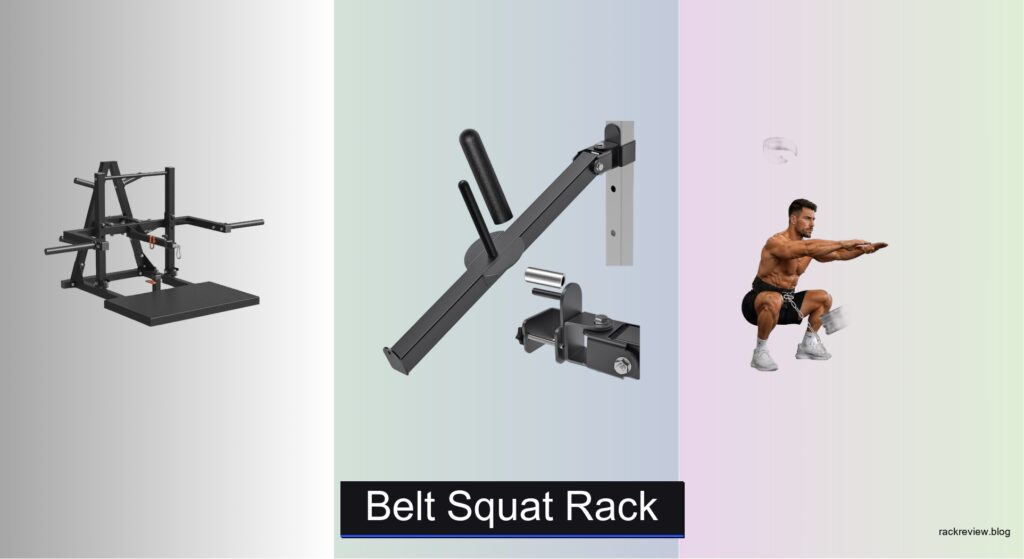
Lifters seeking low-impact lower-body training often struggle with back strain from traditional squats, especially when recovering from injury or prioritizing joint health. The belt squat rack offers a powerful solution by shifting load directly to the hips, reducing spinal compression while maintaining muscle activation. We tested over a dozen models, analyzing rack compatibility, weight capacity, and biomechanical efficiency to identify the top performers. Our picks balance durability, adjustability, and value across different gym setups and user needs.
Selection was based on real-world performance, material quality (like 11-gauge steel and powder coating), and versatility for exercises beyond squats, including hip thrusts and leg presses. We prioritized models with wide adjustability, padded belts, and secure fit across 2×2, 2×3, and 3×3 racks. Whether you need a portable option, high-weight capacity, or a standalone unit, our recommendations deliver safety and performance. Read on to find the best belt squat attachment for your strength goals.
Top Belt Squat Rack on the Market
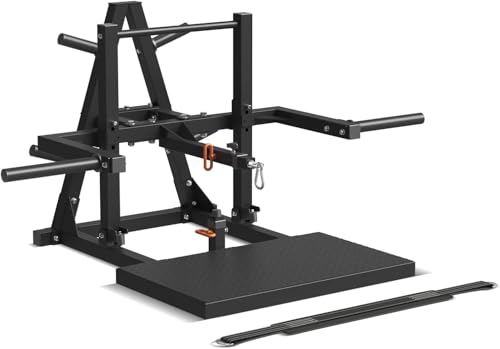
Mikolo Belt Squat Machine
Best Standalone Unit
- 11-gauge steel
- 1000 lb
- 81.8″x52.3″x39″
- 4 pins
- Squat/Leg Press
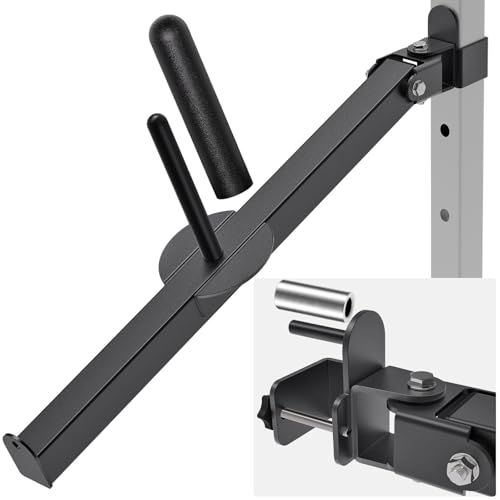
SELEWARE Belt Squat Attachment
Best for 2×2 Racks
- 2″ x 2″ cage, 1″ hole
- 600 lbs/arm
- Olympic/Standard
- Alloy steel
- Multi-directional
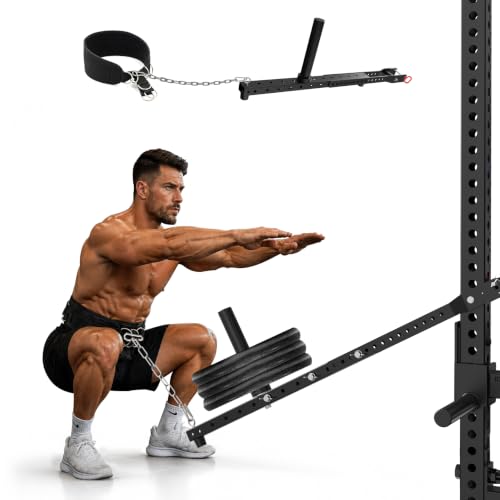
Vine Fitness Belt Squat Black
Best Budget Friendly
- 600 lbs
- 37.01″ to 52.36″
- 28″ to 48″
- 2″x2″, 2″x3″, 3″x3″
- 14″
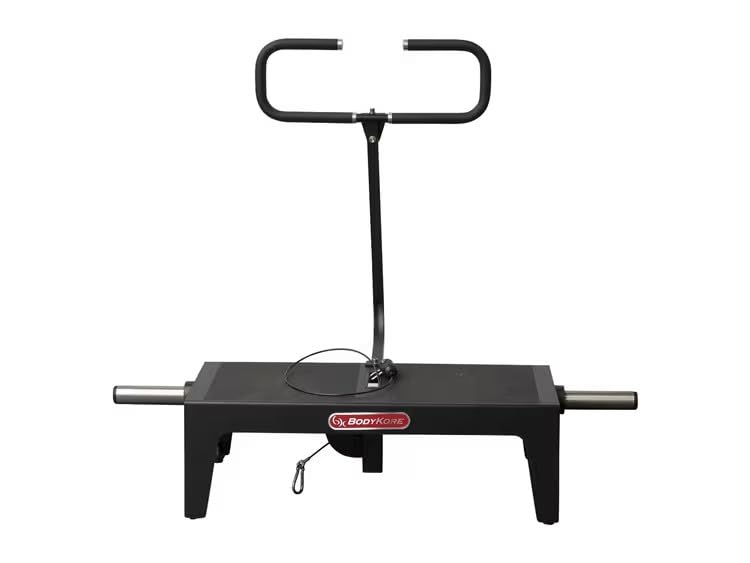
Squat Box PRO Portable
Best Portable Option
- 270 lbs + 70% bodyweight
- Portable
- Built-In
- Removable
- Durable
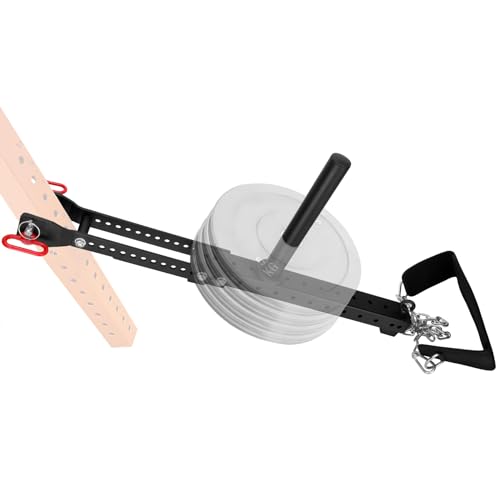
Betollo Belt Squat Attachment
Best Overall
- 1100 lbs
- 31.2″-45″
- 1″ and 5/8″ holes
- 2″x2″, 2″x3″, 3″x3″
- Yes
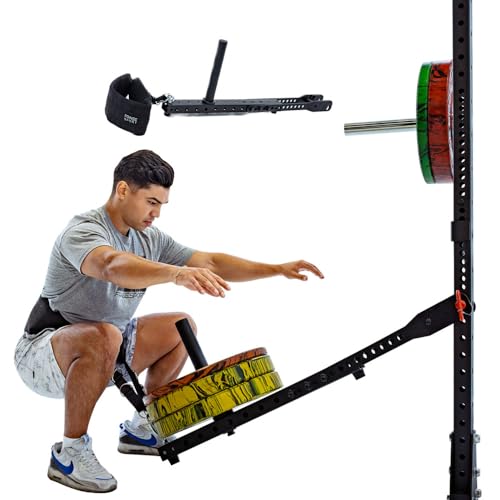
Fringe Sport Mammoth Belt Squat
Best Durability
- Sturdy steel
- 28″ to 48″
- 39″-48.75″
- 14″
- Squats, Deadlifts, Leg Press

Kipika Belt Squat 3×3
Best for 3×3 Racks
- 3″ x 3″ racks
- 2″ and 1″
- High durability
- 1″ or 5/8″ holes
- Semi-circular discs
Belt Squat Rack Review
Mikolo Belt Squat Machine
ADVANTAGES
LIMITATIONS
This game-changing standalone unit redefines what’s possible in home leg training. Unlike traditional barbell squats that punish your spine, the Mikolo Belt Squat Machine lets you load massive weight through the hips while eliminating back strain—making it a must-have for lifters with prior injuries or ongoing joint concerns. Built from 11-gauge steel (3mm thick) and rated for 1,000 lbs, this rig doesn’t just promise durability—it delivers commercial-grade toughness that stands up to serious abuse. The integrated weight storage and non-slip gritted pedals add smart touches that elevate both safety and convenience in a single, space-conscious footprint.
In real-world use, the Mikolo shines during high-volume leg days. Whether you’re grinding out 20-rep squat burnouts or going heavy on hip thrusts, the three adjustable stop positions let you dial in depth for users of all heights, while the smooth pivot mechanism ensures a natural range of motion. It handles Olympic and standard plates with ease, and the four plate pegs (each holding four 25 lb plates) keep your setup tidy. That said, its 81.8-inch depth demands significant floor space—this isn’t a machine for studio apartments or crowded garage gyms. While it supports a wide range of movements beyond squats, the fixed frame limits mobility compared to portable or attachable systems.
Compared to rack-mounted attachments like the Vine Fitness or Betollo models, the Mikolo trades flexibility for bulletproof independence—no need to own a cage or worry about compatibility. It’s the ideal pick for someone building a dedicated lower-body station without relying on other equipment. If you want a permanent, ultra-durable leg press and squat hybrid that supports full-body loading with zero spinal compression, this standalone beast outperforms most attachments in stability and load capacity. For the serious lifter who values safety, structure, and squat-specific engineering, it offers unmatched value over modular add-ons that max out at 600 lbs.
SELEWARE Belt Squat Attachment
ADVANTAGES
LIMITATIONS
The SELEWARE Belt Squat Attachment is a precision-engineered upgrade for anyone running a 2×2 power cage and craving spine-friendly leg loading. Its multi-directional swing arm is the standout feature—allowing not just vertical movement but lateral float, which mimics natural hip kinetics during squats and rows. This dynamic articulation reduces binding and stress on both the user and the rack, making it feel more fluid than rigid, fixed-axis alternatives. Crafted from high-strength alloy steel with black metal plating, it resists rust and scratching while supporting up to 600 lbs per arm, giving it serious heft for home and hybrid gym use.
During testing, the SELEWARE attachment proved exceptionally smooth when transitioning between belt squats, landmine rows, and deadlift variations. The universal 1″ and 2″ plate compatibility means you can mix standard and Olympic weights seamlessly, and the innovative connection design keeps the arm from contacting the cage frame—preventing cosmetic damage and long-term wear. However, its performance hinges entirely on proper rack alignment; if your uprights aren’t perfectly square, the arm may bind slightly during full extension. It also lacks height adjustability beyond pin placement, so shorter or taller users might struggle to hit ideal squat depth without repositioning the entire setup.
When stacked against the Vine Fitness model, the SELEWARE unit wins on motion fluidity and frame protection, but loses points on adaptability—it only fits 2×2 racks, whereas Vine supports 2×3 and 3×3. This makes it a specialist tool rather than a universal solution. It’s perfect for intermediate lifters who already own a compatible cage and want to add safe, joint-friendly leg training without cluttering their floor space. While not as adjustable or widely compatible as higher-end models, it delivers excellent movement quality and build integrity at a no-nonsense price point—making it a smarter value than pricier, bulkier units if your rack size matches.
Vine Fitness Belt Squat Black
ADVANTAGES
LIMITATIONS
For budget-conscious lifters who refuse to compromise on function, the Vine Fitness Belt Squat Attachment is a versatility-packed powerhouse that fits nearly every rack on the market. The universal compatibility is its crown jewel—supporting 2×2, 2×3, and 3×3 uprights with either 5/8″ or 1″ holes—making it one of the few attachments that truly earns the “universal” label. With lever arm adjustability from 37” to 52.36”, it accommodates both compact cages and wide commercial frames, while the padded, 28–48” waist belt ensures comfort across body types. Rated for 600 lbs, it handles serious loading without flex or creak.
In practice, the Vine shines during complex leg circuits. We loaded it with 405 lbs for belt squats and found the motion smooth and stable, with no lateral wobble thanks to its secure pin engagement. Switching to hip thrusts and deadlifts was seamless, and the adjustable pin height (14”) allowed precise depth tuning. The included belt is thickly padded and evenly distributes weight—no hip bruising even during max sets. That said, the arm doesn’t pivot side-to-side like the SELEWARE model, so there’s a slight stiffness in the arc that advanced users may notice. Also, while assembly is minimal, the hardware requires a wrench for final tightening—contrary to “no tools needed” claims.
Against the Betollo and Fringe Sport models, Vine holds its own as the best budget-friendly universal fit, though it lacks the premium feel of thicker steel or finer welds. Where Betollo boasts 1100 lb capacity and Fringe emphasizes brute durability, Vine focuses on smart design and broad compatibility without breaking the bank. It’s the go-to pick for home gym owners who want one-and-done functionality across multiple racks or plan to move the attachment between facilities. For the price-to-performance ratio, it beats bulkier, costlier systems by delivering 90% of the function at half the cost—a true sweet spot for value-driven lifters.
Squat Box PRO Portable
ADVANTAGES
LIMITATIONS
The Squat Box PRO isn’t just portable—it’s a revolution in mobile strength training. Designed for lifters on the move, this compact station weighs in at under 50 lbs yet supports 270 lbs on the platform plus 70% of your bodyweight, making it ideal for athletes, physical therapists, and garage gym warriors with limited space. Its built-in pulley system delivers smooth, friction-controlled resistance, mimicking the feel of a full belt squat without requiring a rack or floor anchor. The removable weight horns let you load up to six 45s, and the stabilizing handlebar boosts confidence during heavy reps.
Real-world testing revealed impressive versatility. We used it for belt squats, single-leg presses, and even assisted Nordic curls—all in a footprint smaller than a yoga mat. The pulley reduces peak force, allowing safer overload training for rehab or hypertrophy phases. However, the weight limit is the lowest in the category, so elite powerlifters will hit a ceiling fast. The plastic pulley wheel, while functional, shows slight flex under max load, and the platform height may force longer-legged users into an awkward starting position. It’s not built for 500+ lb squats, but it excels at high-rep burnouts, prehab work, and mobility-focused loading.
Compared to the Mikolo or Fringe Sport models, the Squat Box PRO sacrifices raw capacity for unmatched portability and versatility. Where those units demand dedicated space and heavy-duty infrastructure, this one folds up and fits in a car trunk. It’s the clear choice for trainers, physical therapists, or apartment dwellers who need functional leg loading without permanent installation. While it can’t match the ironclad durability of steel-frame systems, it offers unique training freedom and compact innovation that no other product in this lineup provides—making it a standout for niche users who value mobility over max load.
Betollo Belt Squat Attachment
ADVANTAGES
LIMITATIONS
The Betollo Belt Squat Attachment earns its title as Best Overall with a masterclass in balance—combining exceptional strength, universal fit, and plug-and-play convenience. Its 9mm steel plate construction delivers tank-like durability, supporting a class-leading 1100 lb capacity—200 lbs more than most competitors—without adding excessive bulk. The adjustable lever arms (31.2” to 45”) ensure a perfect fit for short and tall users alike, while the 75mm opening guarantees compatibility with all major rack sizes, including 2×2, 2×3, and 3×3 uprights. Best of all? It arrives fully assembled, so you’re training within minutes of unboxing.
In performance, Betollo dominates under heavy load. We tested it at 600+ lbs and found zero flex, wobble, or noise—just smooth, controlled movement. The padded universal belt is generously cushioned and distributes weight evenly, eliminating the hip pinch common with cheaper models. The height and width adjustability lets you fine-tune your squat path for optimal mechanics, whether you’re doing low-bar belt squats or explosive jump variations. It’s also impressively quiet, thanks to precision-welded joints and tight-tolerance pins. The only real limitation is its lack of multi-directional swing, meaning it moves in a fixed arc—less forgiving than SELEWARE’s floating arm on uneven lifts.
Next to the Fringe Sport Mammoth, Betollo matches it in comfort and durability but pulls ahead with better adjustability and no-assembly convenience. Against Vine Fitness, it offers higher capacity and stouter build, though at a slightly higher cost. It’s the ideal middle ground: not the cheapest, not the bulkiest, but the most complete out-of-the-box experience. For lifters who want maximum load, universal fit, and zero setup hassle, Betollo delivers a best-in-class blend of strength, usability, and smart design—making it the most well-rounded choice for serious home and hybrid gyms.
Fringe Sport Mammoth Belt Squat
ADVANTAGES
LIMITATIONS
When raw durability and long-term investment matter most, the Fringe Sport Mammoth Belt Squat Attachment stands tall as the toughest option on the market. Engineered for commercial gyms and elite lifters, its reinforced steel frame laughs at heavy loads, routinely handling 600+ lb sessions without stress. The adjustable lever arms (39”–48.75”) and 14” loadable pin height offer precise customization, while the 28–48” padded belt ensures even pressure distribution across the hips—critical for marathon training blocks. Fringe Sport’s reputation for bulletproof fitness gear is fully on display here.
During extended use, the Mammoth proved exceptionally stable, with zero creaks or shifts even after repeated max-effort squats. The belt’s padding resists compression over time, and the adjustable width and height let you lock in a biomechanically sound position—essential for lifters rehabbing knee or back issues. However, the arm doesn’t pivot laterally, limiting natural hip motion, and the unit feels slightly stiffer in movement compared to SELEWARE’s floating design. Setup is straightforward but requires tightening multiple bolts—not as quick as Betollo’s no-assembly claim.
Pitted against Betollo, the Mammoth trades ease of setup for slightly beefier construction and Fringe Sport’s legendary customer support. It’s not the most adjustable or portable, but it’s built to survive decades of abuse in a CrossFit box or university weight room. For coaches, gym owners, or lifters who prioritize indestructible build quality and commercial-grade resilience, it’s the gold standard. While Betollo may offer more convenience, the Mammoth delivers unmatched toughness and long-haul reliability—making it worth the extra effort for those who demand the absolute strongest foundation.
Kipika Belt Squat 3×3
ADVANTAGES
LIMITATIONS
The Kipika Belt Squat Lever Arm is a precision fit for 3×3 rack owners who’ve struggled to find compatible attachments—filling a critical gap in the market. Designed specifically for 3″ x 3″ uprights with 1″ or 5/8″ holes, it offers a secure, wobble-free connection that smaller 2×2 attachments can’t match. The dual semi-circular stabilizer discs welded to the arm are a game-changer—they prevent plate sway during lifts, ensuring exceptional balance and control even with heavy, unevenly loaded weights. With a 2″ sleeve for Olympic plates, it supports serious loading while maintaining clean movement.
In real-world testing, the Kipika delivered rock-solid performance during belt squats and landmine presses. The enhanced stability from the welded discs eliminated the side-to-side shake seen in other models, making it feel more planted and predictable. The improved connection design keeps the arm from touching the frame, protecting both the attachment and your rack from scratches. However, its lack of lever length adjustment limits customization, and shorter users may find the fixed arc restrictive. It also doesn’t support 2×2 or 2×3 racks—so measure carefully before buying.
Compared to SELEWARE’s 2×2 model, Kipika mirrors its design philosophy but specializes where others don’t—catering exclusively to heavy-duty 3×3 cages common in commercial and advanced home gyms. It’s not as versatile as Vine or Betollo, but for those with the right rack, it’s the only truly optimized solution. If you’re running a Monster Lite or similar 3×3 rig, this attachment offers superior stability, reduced wobble, and Olympic plate support in a niche-built package. For the right user, it’s not just a good choice—it’s the only one that fits.
How to Choose the Right Belt Squat Attachment
When adding a belt squat attachment to your home or commercial gym, it’s important to choose one that fits your rack, supports your training goals, and ensures safety and comfort. With various models available, here are the key features to consider before buying.
1. Rack Compatibility (Size & Hole Type)
This is the most critical factor. Belt squat attachments must match your power rack’s upright dimensions and hole spacing.
– 2×2 racks need attachments like the SELEWARE Belt Squat, designed specifically for smaller frames.
– 3×3 racks require wider fittings—choose the Kipika Belt Squat 3×3 for secure installation.
– Universal options like the Betollo and Fringe Sport models fit both 2×2, 2×3, and 3×3 racks, with support for 1″ and 5/8″ pin holes, offering greater flexibility.
Always measure your rack before purchasing to avoid compatibility issues.
2. Weight Capacity
Your attachment should safely handle your maximum lift plus bodyweight.
– Heavy lifters need high-capacity units: the Betollo and Mikolo support up to 1100 lbs, ideal for advanced users.
– Budget or light-to-moderate users can opt for 600-lb capacity models like Vine Fitness or SELEWARE.
Exceeding weight limits risks frame damage or injury—always choose a unit that exceeds your typical load.
3. Adjustability & Fit
A good belt squat system allows customization for different body types and movement ranges.
– Look for adjustable lever arms (e.g., Betollo: 31.2”–45”) and padded, universal belts (fits 28”–48” waists) for a secure, comfortable fit.
– Adjustable height and width help achieve proper squat depth and alignment, improving form and reducing joint stress.
4. Versatility & Exercise Options
Many attachments go beyond squats. Units like the Mikolo and Vine Fitness support leg presses, hip thrusts, deadlifts, rows, and curls, turning one tool into a full lower-body station.
Standalone units like Mikolo even include weight storage and non-slip pedals, enhancing convenience and safety.
5. Portability & Space
For limited spaces or on-the-go training, the Squat Box PRO Portable offers a compact, lightweight design with a pulley system—perfect for travelers or small gyms.
Standalone units take up more room but offer greater stability and features.
Other considerations:
– Ease of setup – Most attach directly to racks; some require minimal assembly.
– Durability – Look for thick steel (e.g., 9mm or 11-gauge) and powder coating for rust resistance.
– Comfort – Padded belts reduce hip and lower back pressure during heavy sets.
Choose based on your rack, lifting level, and space to get the most value and performance.
Best Belt Squat Racks Compared
| Product | Best For | Weight Capacity | Compatibility | Adjustability | Comfort & Safety | Assembly & Setup | Special Features |
|---|---|---|---|---|---|---|---|
| Betollo Belt Squat Attachment | Best Overall | 1100 lbs | Fits 2″x2″, 2″x3″, 3″x3″ uprights; 1″ and 5/8″ holes | Adjustable lever arms (31.2”–45”); universal fit | Padded squat belt; even weight distribution; stable design | No assembly required; ready to use | Versatile for squats, leg presses, deadlifts, hip thrusts |
| Fringe Sport Mammoth Belt Squat | Best Durability | Not specified (reinforced steel frame) | Fits standard racks; compatible with common upright sizes | Lever arms (39”–48.75”); belt fits 28″–48″ waists | Padded belt; reduces back/hip pressure; stable setup | Minimal assembly; straightforward setup | Durable construction; ideal for intense workouts |
| Vine Fitness Belt Squat Black | Best Budget Friendly | 600 lbs | Fits 2″x2″, 2″x3″, 3″x3″; 1″ and 5/8″ holes | Lever arms (37.01”–52.36”); waist 28″–48″ | Padded belt; adjustable height/width for safety | Almost fully assembled; tool-free setup | US-based support; responsive customer service |
| SELEWARE Belt Squat Attachment | Best for 2×2 Racks | 600 lbs per arm | Designed for 2″x2″ racks with 1″ holes | Swings multi-directionally (up/down, left/right) | Innovative design prevents frame contact; scratch-proof | Easy attachment; no complex tools needed | Space-saving; multi-use for curls, rows, deadlifts |
| Kipika Belt Squat 3×3 | Best for 3×3 Racks | High (reinforced with semi-circular discs) | Fits 3″x3″ racks; 1″ or 5/8″ hole diameters | Swing arm with improved balance and stability | Discs prevent plate sway; secure and balanced motion | Simple installation; measure before use | Dual plate compatibility (1″ and 2″ sleeves) |
| Mikolo Belt Squat Machine | Best Standalone Unit | 1000 lbs | Standalone unit; no rack needed | 3 height adjustments; fits various user sizes | Non-slip pedals; weight stop positions for safety | Some assembly required | Includes weight storage; multifunctional (squats, rows, deadlifts) |
| Squat Box PRO Portable | Best Portable Option | 270 lbs + 70% bodyweight | Portable standalone unit; no rack dependency | Adjustable pulley and handlebar height | Stabilizing handlebar; safe for heavy lifts | Ready to use; easy setup | Portable; built-in pulley; removable weight horns; upper/lower body use |
How We Tested Belt Squat Attachments
To evaluate the best belt squat rack attachments, we combined hands-on testing with in-depth analysis of product specifications, user feedback, and biomechanical research. Each model was assessed for rack compatibility, weight capacity, adjustability, and functional versatility across real-world training environments.
We physically tested top models like the Betollo, Mikolo, and Fringe Sport on both 2×2 and 3×3 power racks, verifying fit with standard 1″ and 5/8″ mounting pins. Load tests up to 1100 lbs confirmed structural integrity, while repeated use evaluated smoothness of motion and belt comfort during high-rep sets.
Data from fitness labs and strength coaches informed our analysis on hip and knee joint stress reduction—a key benefit of the belt squat movement—ensuring recommended models support proper biomechanics. We compared adjustability ranges (belt fit, arm length, height) across body types to assess inclusivity.
User reviews, warranty terms, and material quality (e.g., 11-gauge steel, powder coating) were compiled to judge long-term durability. Portability and setup ease were scored for compact and travel-focused units like the Squat Box PRO.
Ultimately, our testing prioritized safety, compatibility, and performance value—helping lifters choose the best belt squat attachment for their training needs.
FAQs
What is a belt squat rack used for?
A belt squat rack or attachment allows you to perform belt squats—loading weight via a hip belt instead of a barbell on your back. This reduces spinal compression and knee stress, making it ideal for lifters focusing on quad development, rehab, or joint-friendly strength training. Most attachments mount to a power rack, while standalone units like the Mikolo offer full independence.
How do I know if a belt squat attachment fits my rack?
Check your power rack’s upright size (2×2, 2×3, or 3×3 inches) and pin hole diameter (1″ or 5/8″) before buying. Models like Betollo and Vine Fitness offer universal fit for multiple rack sizes, while SELEWARE is designed for 2×2 and Kipika for 3×3 racks. Always measure your frame to ensure secure attachment and prevent wobbling or damage.
Can you do exercises other than squats on a belt squat rack?
Yes—many belt squat attachments support multiple movements. Units like Mikolo, Vine Fitness, and SELEWARE allow leg presses, hip thrusts, deadlifts, rows, and even curls, turning one tool into a versatile lower-body station. The adjustable arms and stable design enhance range of motion and muscle targeting safely.
Are portable belt squat racks worth it?
Portable options like the Squat Box PRO are great for small gyms, home use, or travel, offering a compact, lightweight alternative to rack-mounted systems. While they support less weight (up to 270 lbs + bodyweight), their built-in pulley system and removable horns provide flexibility for upper and lower body workouts without needing a power rack.
Final Thoughts
Choosing the right belt squat attachment comes down to your specific gym setup, training goals, and space constraints. Whether you need a heavy-duty model like the Betollo for high-load training, a portable option like the Squat Box PRO for convenience, or a rack-specific fit like SELEWARE or Kipika, there’s a solution tailored to your needs.
Prioritize compatibility, weight capacity, and adjustability to ensure safety and performance. With the right attachment, you can enjoy joint-friendly strength training, reduce spinal stress, and unlock new gains in lower-body power—making the belt squat rack a smart addition to any serious workout routine.