Removing pallet racking isn’t just about clearing space. It’s a high-stakes operation that impacts safety, compliance, and your bottom line. Whether you’re closing a warehouse, relocating, or reconfiguring your layout, pallet rack removal demands precision, planning, and professional execution. Done incorrectly, it risks worker injury, structural damage, or lost asset value. But when handled right, it frees up critical floor space, prevents accidents, and can even generate cash through resale.
This guide walks you through every phase of pallet rack removal. You’ll learn the step-by-step disassembly process, discover top-rated service providers, understand safety best practices, and uncover how to recover value from used components. Whether you’re managing the project in-house or hiring experts, this resource ensures you make informed, safe, and cost-effective decisions.
Reasons for Pallet Rack Removal
Understanding why you’re removing racking helps determine the best approach. Whether you need full dismantling, partial disassembly, relocation, or liquidation, knowing your goal shapes the entire process.
Free Up Warehouse Floor Space
Clearing out old or unused racking instantly increases usable square footage. This extra space improves forklift maneuverability, reduces congestion, and supports workflow redesign. Many companies convert freed areas into production zones, offices, or high-density storage systems. The immediate benefit is more operational flexibility and better traffic flow throughout your facility.
Replace Damaged or Unsafe Racks
Visible bends, rust, cracked uprights, or missing anchors compromise structural integrity. OSHA requires all pallet racks to be anchored and in good condition. Proactively removing damaged units eliminates collapse risks and keeps your facility compliant. Regular inspections help identify compromised racks before failure occurs.
Upgrade Storage Layout Efficiency
Changing business needs often require reconfiguring storage. New SKUs, automation implementation, or different picking strategies may demand push-back, flow, or drive-in systems for higher density. Modular racking allows disassembly and reassembly into systems that better match your operational requirements.
Prepare for Facility Relocation
When moving to a new warehouse, reusing existing racking saves thousands of dollars. But it requires careful dismantling, labeling, transport, and reinstallation. Professional crews ensure components arrive intact and ready for reuse at your new location.
Liquidate Unused Equipment
If racks are no longer needed, selling them offsets removal costs or even generates profit. Many buyers pay cash on-site and handle full removal, turning obsolete infrastructure into immediate revenue. This approach eliminates disposal fees while recovering capital.
Top Service Providers for Pallet Rack Removal
Hiring a professional team speeds up the job, reduces risk, and often pays for itself through buyback programs and floor repair services. Here are the top providers to consider.
Used Pallet Racking Storage Solutions
This company offers full removal, relocation, floor repair, and forklift services. Their buyback program pays cash on-site and handles all dismantling work. They stock teardrop beams, uprights, and wire decking. Contact them at 773-797-4322, Monday through Saturday 9:30 AM to 5:30 PM, located at 751 Hilltop Dr in Itasca, IL. This provider is ideal for fast, hassle-free removal with instant payment.
Pallet Rack World
Pallet Rack World provides installation, breakdown, safety surveys, and AutoCAD layout design services. Their specialties include push-back, flow, mezzanine, and conveyor systems. Notable clients include Coca-Cola, Honda Jet, Procter & Gamble, and Volvo Trucks. They offer nationwide shipping on used inventory. Contact them at 800-974-9086 or sales@palletrackworld.com, located in Liberty, NC. This provider excels at complex racking types and custom redesigns.
East Coast Storage Equipment Co.
This company specializes in dismantling, liquidation, and nationwide resale. Their focus on safety, efficiency, and minimal downtime makes them a strong choice. Contact them at (732) 451-1808 through their online form. They have a strong network for maximizing resale value.
REB Storage Systems
With over 60 years of experience, REB offers reuse assessment, reinstallation, resale, and engineering validation. Their dedicated project managers and certified engineers ensure reused racks meet OSHA and manufacturer standards. This provider is the top choice for large-scale relocations and compliance-critical projects.
Step-by-Step Dismantling Process
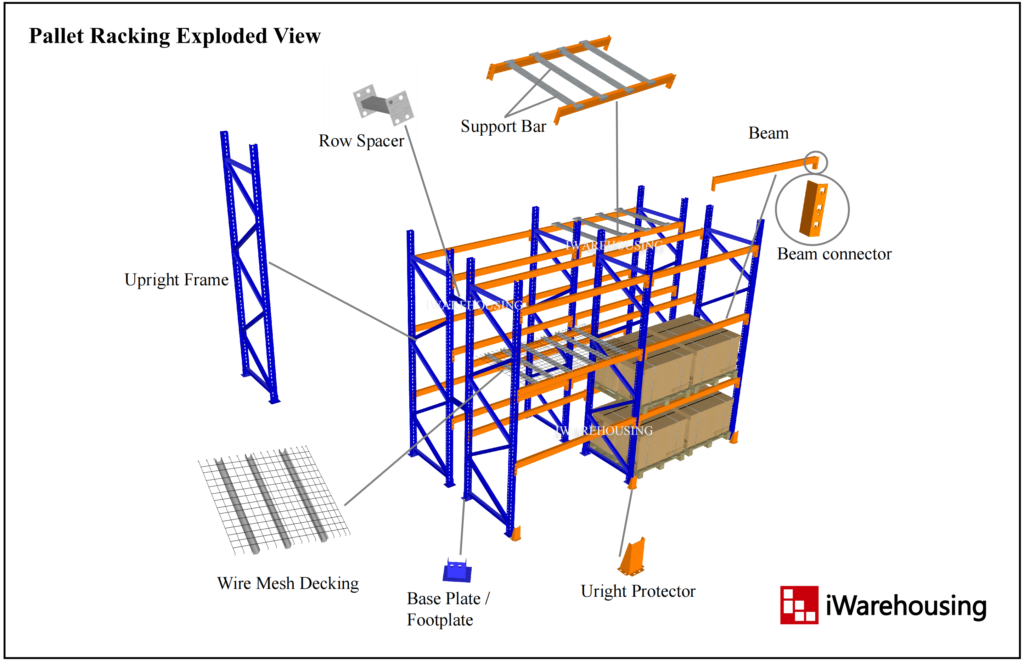
Follow this proven sequence to remove racks safely and efficiently. Whether doing it yourself or supervising a crew, this process minimizes risk and preserves component value.
Clear Work Area First
Start with a clean slate to ensure safe working conditions. Remove all inventory using forklifts and stage goods in designated zones to avoid congestion. Take down accessories like netting, signage, and barriers. Relocate nearby machinery such as conveyors or saws. Disconnect electrical systems using LOTO procedures. This preparation prevents accidents and keeps the workflow moving smoothly.
Remove Wire Decking and Accessories
Wire decks are fragile and easily bent. Handle them carefully to preserve resale value. Lift panels off beam supports by hand or with forklift. Stack neatly on pallets. Inspect for damage because reusable decks add value. Never drop or drag decking because it warps quickly and loses worth.
Take Down Horizontal Beams
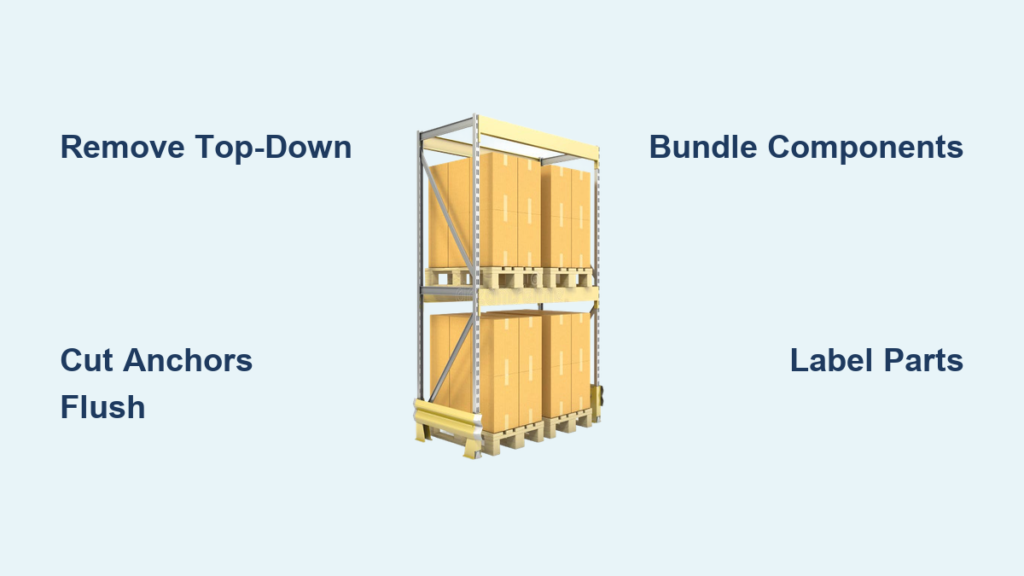
Work top-down to maintain stability throughout the process. Start at the highest level and use a wrench or impact tool to loosen bolts or disengage teardrop pins. Support beam ends with forklift during removal. Label beams by length and original position if reusing. Always wear PPE including gloves, hard hat, safety glasses, and steel-toed boots.
Remove Braces and Connectors
Braces stabilize uprights, so remove them last before lowering frames. Detach diagonal and horizontal braces from both ends. Keep them grouped by size and type. Inspect for bends or cracks because damaged braces compromise safety and should be scrapped rather than reused.
Lower Upright Frames Safely
Once free of beams and braces, use a forklift with a soft attachment to tilt the upright forward and backward. Lower slowly and never let it fall. Align uprights for bundling. Sudden collapse can injure workers or damage concrete, so take your time with this step.
Remove Floor Anchors
Anchors are built to stay, so removal requires proper technique. First remove nuts and washers. Then lay the upright flat to access the embedded bolt. Choose one of three methods. Cut and grind flush using an angle grinder, which is the most common approach. Drive below surface using a cold chisel and hammer. Or extract fully, though this risks concrete damage.
Repair Anchor Holes
After removal, fill holes with industrial epoxy or cementitious grout. Grind the surface flush to prevent forklift damage and trip hazards. Inspect for cracks or spalling. OSHA requires racks to be anchored during operation, but floors must be restored after removal, especially in leased spaces.
Bundle and Secure Components
Proper bundling protects value and simplifies transport. Group like items: uprights by height, beams by length. Stack wire decks on skids. Use three-quarter-inch heavy-duty steel strapping with two straps per side. Limit bundles to approximately 30 pieces for easy handling. Label clearly with component type, quantity, and condition.
Tools and Equipment Needed
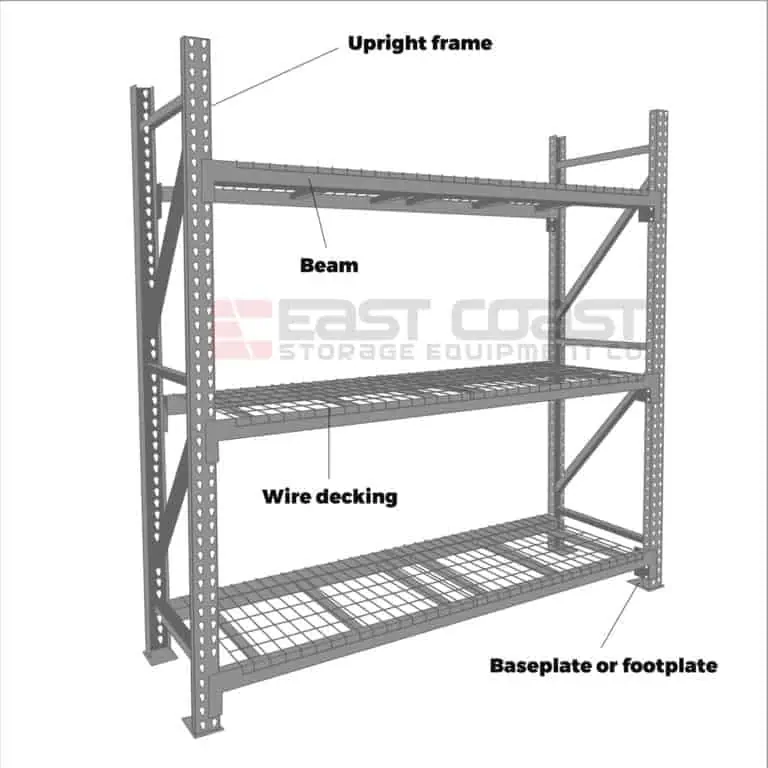
Equip your team properly to avoid delays and damage. Having the right tools on hand makes the difference between a smooth operation and a problematic one.
Hand Tools
You need adjustable wrenches, socket sets, screwdrivers, pry bars, and a hammer. A torque wrench is essential for reassembly work. Keep pliers handy for needle-nose and locking tasks.
Power Tools
An impact wrench helps with stubborn bolts. An angle grinder cuts anchors flush. A drill removes broken bolts or prepares holes for patching.
Heavy Machinery
Forklifts are essential for lifting, supporting, and transporting components. Capacity should exceed the weight of the heaviest component. Use pallet or soft attachments to prevent damage to uprights.
Safety Gear
Always wear hard hats, safety glasses, cut-resistant gloves, steel-toed boots, and high-visibility vests. Hearing protection is necessary when using power tools. Fall protection is required if working at height. Consult the manufacturer’s manual because designs vary by brand.
Safety Precautions and Best Practices
Safety isn’t optional. It’s the foundation of every successful removal project. Following these protocols protects workers and prevents accidents.
Train All Workers
Ensure everyone knows the disassembly sequence, tool operation, hazard recognition, and emergency procedures. Untrained staff are three times more likely to cause accidents. Proper training covers falls, pinch points, and falling debris.
Wear Required PPE
Mandatory gear includes hard hat, safety glasses, gloves, steel-toed boots, and high-visibility clothing. No exceptions exist because one dropped beam can cause serious injury.
Maintain Structural Stability
Always work top-down and back-to-front. Never remove multiple beams from one upright at once. Use forklifts to support uprights during final disconnections. Never stand on racks. Use scissor lifts or ladders instead.
Mark Hazard Zones
After anchor removal, tape off open holes and post warning signs. Keep emergency exits clear. The goal is preventing trips, falls, and forklift damage.
Maximize Resale Value After Removal
Used racking is a valuable commodity if handled correctly. Proper treatment preserves worth and maximizes your return.
Use Buyback Services
Top providers buy on-site and remove for free. Used Pallet Racking Storage Solutions offers cash on pickup. Pallet Rack World buys old systems. East Coast Storage provides competitive resale pricing. REB Storage Systems can resell through their network. This eliminates disposal fees and generates income.
Factors That Affect Value
Buyers consider condition first. Minor wear means high value while bent or damaged parts go for scrap. Type matters because teardrop style often commands better prices than structural or push-back configurations. Completeness matters because full sets sell faster. Demand varies by region, so check local markets.
Condition Tips
Clean racks look newer and command higher prices. Wipe down components before evaluation. Store in dry conditions to prevent rust. Proper handling preserves value while damage drops it by 30% or more.
Efficiency and Cost Comparison
Understanding the time and cost differences helps you make smart decisions about DIY versus professional removal.
Time and Labor Benchmarks
Professional crews complete full warehouse removal in approximately six business days. Internal teams typically need 10 days or more. Professionals work 30 to 50% faster due to experience. Damage rates stay low with professionals but run high with inexperienced internal teams. Total cost often ends up lower with professionals when factoring in buyback value.
Resale Value Retention
With proper handling, 80 to 90% of original value is retained. Poor handling drops value by 30% or more. For example, $10,000 in racking could net $8,500 if not damaged.
Who Needs Pallet Rack Removal
Different situations call for different approaches. Understanding your scenario helps you plan effectively.
Warehouse Closures
Exiting a lease requires full removal and floor repair. Avoid penalties with OSHA-compliant anchor hole filling. Most landlords require smooth, safe floors before turnover.
Business Relocations
Reuse racks at your new site to save thousands. Professionals handle disassembly, transport, and reinstallation. This preserves your investment while ensuring proper setup.
Layout Redesigns
Upgrade to high-density systems by removing outdated racks. Support automation or flow-through models with proper planning. New configurations improve efficiency and storage capacity.
Retiring Owners
Liquidate assets during exit and get paid cash on-site. Avoid storage or disposal hassle. Turn obsolete infrastructure into immediate revenue.
Planning and Design Support
Professional providers offer additional services that improve outcomes. Take advantage of these resources.
AutoCAD Layout Services
Providers like Pallet Rack World and REB Storage Systems offer custom warehouse designs and visual AutoCAD renderings. Use these to optimize space and workflow before removing old racks.
Reuse Assessment and Engineering
REB provides structural evaluation of used components and certification for OSHA compliance. Reinstallation by certified crews ensures safety. This is critical for high-load or safety-sensitive environments.
Component Specs and Storage Tips
Knowing what you’re working with helps with planning and valuation.
Common Dimensions
Uprights range from 8 to 40 feet tall in roll-formed or structural steel. Beams come in 8, 10, and 12-foot standard lengths. Wire decking is 48 inches deep with width matching the beam.
Proper Storage After Removal
Store in a dry, covered area. Elevate on skids rather than sitting directly on concrete. Stack flat and don’t overload vertical piles. Protect from forklift traffic. Moisture kills resale value, so keep components dry.
Critical Pre-Removal Checks
Before starting, verify you have the right resources. This prevents problems later.
Assess Training and Insurance
Internal teams often lack racking-specific training. Professionals carry liability and workers’ comp insurance. Verify coverage before hiring anyone.
Calculate True Labor Cost
Don’t just compare service quotes. Factor in employee wages multiplied by hours, lost productivity, overtime, and risk of damage. Internal removal can cost more than hiring pros when all factors are included.
Prevent Damage and Lost Parts
Common issues include bent beams from improper handling, lost bolts or decking, and mixed components with no labels. Use tagging, bundling, and clear staging zones to prevent these problems.
Key Takeaways for Pallet Rack Removal
Pallet rack removal is more than cleanup. It’s a strategic operation that affects safety, compliance, and finances.
Safety comes first. Use PPE, proper tools, and maintain stable disassembly order. Always work top-down by removing decking, beams, braces, then uprights. Cut and grind anchors flush, then fill holes with epoxy for smooth floors.
Bundle components smart with 30 pieces maximum and two steel straps per side. Label every part because this is essential for reuse or resale.
Hire professionals for complex jobs involving speed, safety, and value recovery. Sell unused racks because many buyers pay cash and handle removal for free.
Always plan for floor repair by budgeting time and materials for anchor holes. Preserve component value by storing dry and off-floor. Conduct safety audits before and after removal to ensure OSHA compliance.
Frequently Asked Questions About Pallet Rack Removal
How long does it take to remove a full warehouse of pallet racks?
Professional crews typically complete full warehouse removal in approximately six business days. Internal teams without specialized training may need 10 days or longer depending on size and complexity.
Can I reuse the pallet racks at a new location?
Yes, with proper disassembly, labeling, and transport, racks can be reused. Have a professional assess structural integrity before reinstallation to ensure safety and OSHA compliance.
What happens to the floor anchors after removal?
Floor anchors must be cut and ground flush with the surface. Fill the holes with industrial epoxy or cementitious grout. Grind smooth to prevent trip hazards and forklift damage. This is often required for lease compliance.
How much can I get for selling used pallet racks?
Value depends on condition, type, and market demand. Well-maintained systems retain 80 to 90% of original value. Damaged or incomplete sets drop significantly in worth. Buyback services pay cash on-site.
Do I need to hire professionals for pallet rack removal?
For large-scale projects, tight deadlines, or complex systems like drive-in or push-back racks, professionals are strongly recommended. They work faster, reduce damage risk, and often cover removal costs through buyback programs.
What tools are required for DIY pallet rack removal?
Basic needs include adjustable wrenches, socket sets, pry bars, and a hammer. Power tools like impact wrenches and angle grinders speed up the job. Forklifts are essential for lifting and transporting heavy components.