
Bamboo shelves blend sustainability, strength, and natural beauty, making them perfect for modern homes seeking eco-friendly storage solutions. Whether you want a minimalist bookshelf, a boho plant stand, or a rustic bathroom organizer, learning how to make a bamboo shelf opens the door to customizable, low-impact furniture that costs a fraction of store-bought alternatives. This guide walks you through selecting the right poles, crafting durable joints without metal fasteners, and assembling both simple and advanced designs that last over a decade.
Choose the Right Bamboo Shelf Design for Your Space
Match Dimensions to Your Room
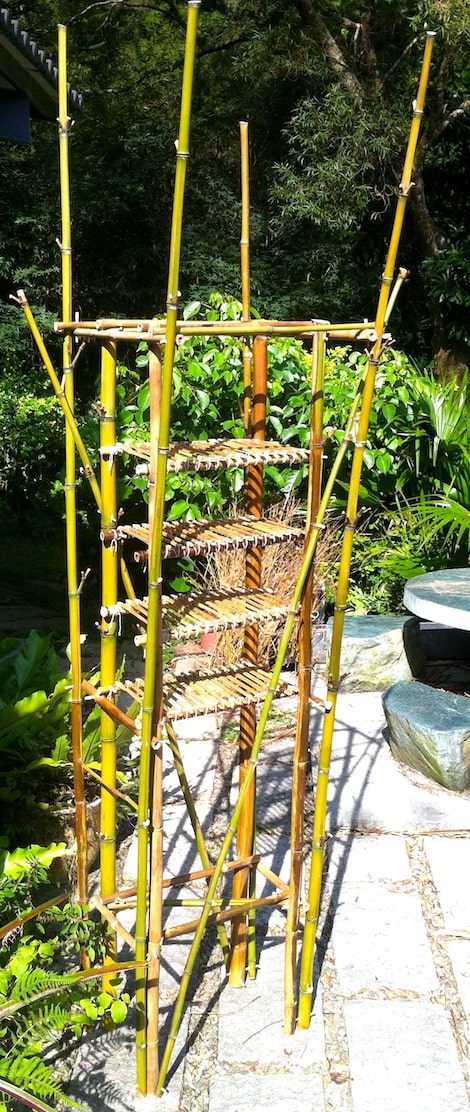
Start by measuring your available space. A standard freestanding bamboo shelf measures 250 cm tall × 50 cm wide × 30 cm deep, ideal for storing books, linens, or potted plants. For kitchens or bathrooms, scale down to 60–120 cm in height for spice racks or sink organizers. Always account for ceiling height and wall clearance to avoid oversized builds.
Adjust tray spacing based on intended use:
• Top and bottom trays need wider gaps (3–5 cm) for bulky items
• Middle shelves require 1.5 cm gaps for socks, toiletries, or small tools
• Taller units need more cross-bracing to prevent tipping
Select a Style That Complements Your Decor
Bamboo shelves adapt to nearly any aesthetic. Choose a design that matches your room’s vibe:
• Boho: Exposed joints, natural texture, curved poles
• Minimalist: Clean lines, hidden dowels, uniform slats
• Vintage/70s: Inspired by rattan-bamboo hybrids with wicker details
• Chinoiserie: Ornate, Asian-inspired curves for bathrooms or vanities
• A-Frame: Self-supporting triangular form perfect for plant displays
• DNA-Shaped: Artistic double helix for sculptural spaces (advanced)
Prioritize Stability with Smart Geometry
Strength comes from shape. Use proven structural techniques:
• Triangular A-frame: Distributes weight efficiently without wall mounting
• Cross-bracing: Diagonal poles prevent side-to-side sway in tall units
• Oblique pillars: Angled supports double as visual interest and reinforcement
• Staggered rungs: In A-frame builds, mismatched ladder rungs lock at the apex
A well-designed bamboo shelf can hold 25–75 lbs per linear foot without screws or metal fasteners.
Gather Materials and Tools for Bamboo Shelf Building
Source Sustainable Bamboo Poles
Use 22 structural poles (2–4 cm diameter) for a full-size shelf. Select:
• Straight poles for uprights and horizontals
• Slightly curved poles for braces or decorative flair
• Poles with branch bases to create built-in hooks for towels or bags
Split three 30 cm-long wide cylinders (6–7 cm diameter) into 64 flat slats (1 cm wide) for intermediate trays. These form the base of slatted shelves when lashed with string.
Pro Tip: Dry bamboo is stable but hard to split. Fresh bamboo is easier to work with but may shrink—allow for slight warping during drying.
Prepare Joinery and Reinforcement Supplies
Avoid metal fasteners with these natural alternatives:
• Bamboo dowels: Cut 5–7 cm segments; split into pegs for friction-fit joints
• Jute rope or twine: Approximately 960 cm total for lashing trays and securing joints
• Wooden dowels (optional): For hybrid A-frame shelves, use 11 equal-length rods
• Wood glue: Secures reinforcement strips; clamp until dry
• Hole saw + jigsaw: Cut openings for hanging potted plants
Equip Yourself with Essential Tools
You can build entirely by hand, but power tools speed up the process:
• Saw: Cut poles to length
• Machete or sharp knife: Split bamboo, shape dowels
• Tape measure + pencil: Mark cuts and drill points
• Electric drill: Align holes quickly
• Hole saw cutter: Start circular cuts in wood
• Jigsaw: Finish cutouts in display planks
• Gloves: Protect hands when splitting or drilling
Safety First: Always wear gloves when holding bamboo during cutting or splitting.
Cut and Prepare Structural Components

Cut Vertical and Horizontal Poles
Begin with the main frame:
• 4 vertical corner poles: Cut to final height (e.g., 250 cm)
• Horizontal supports: Cut for each shelf level
• Oblique bracing poles: 4 diagonal pieces for top stability
Leave extra pieces—bamboo can split unexpectedly during drilling.
Design Hack: Retain natural branch stubs on vertical poles to hang clothes, keys, or plants without extra hardware.
Split Bamboo into Slats for Trays
Create 64 slats (16 per intermediate tray):
- Take three 30 cm-long wide bamboo cylinders
- Use a machete to split each into approximately 1 cm wide strips
- Flatten edges slightly for a smoother surface
No need for perfect uniformity—a rustic look enhances character.
Work Smarter: Split all slats at once to save time during assembly.
Craft Bamboo Dowels for Friction Joints
You will need 60–70 dowels:
- Cut wide bamboo cylinders into 5–7 cm long segments
- Split each into 3–4 small sticks
- Trim ends with a knife for snug fits
Two types work best:
• Node-free: Uniform thickness for standard joints
• Node-based: One end thicker—acts like a nail head for tighter connections
Pro Move: Make dowels as you go—this allows real-time adjustments during drilling.
Assemble the Frame with Natural Joinery
Build Subunits Before Final Assembly
Work in stages for best results:
- Construct left and right side frames separately
- Join them with horizontal cross-members
- Add oblique bracing last to fine-tune alignment
This method prevents misalignment and makes corrections easier.
Drill and Insert Bamboo Dowels
Use friction-fit joinery—no glue or screws needed:
- Hold two poles together at the joint
- Drill aligned holes through both (use same drill bit size as dowel)
- Trim dowel to fit snugly with a machete
- Hammer or press into place
Why It Works: Bamboo’s hardness allows tight, durable connections that resist shear forces.
Adjust for Stability and Leveling
Some flex is normal, but instability means reinforcement is needed:
• Replace weak dowels with node-based versions
• Shorten a pillar if the frame wobbles
• Add cross-bracing if the shelf sways laterally
Critical Check: Always test stability before loading. Push gently on corners to check for movement.
Attach Shelves Using String Lashing
Install Slatted Trays with Jute Rope
For intermediate shelves:
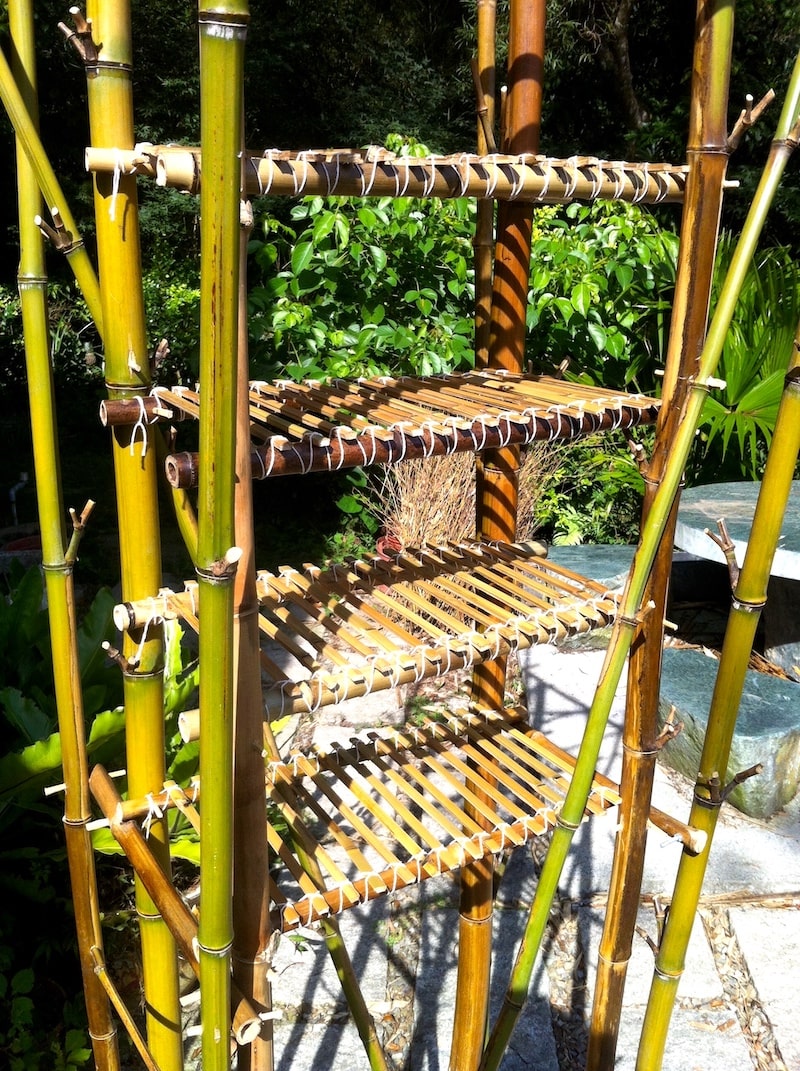
- Lay 16 slats across horizontal supports
- Space evenly (approximately 1.5 cm apart)
- Use 120 cm strings to lash each end to the pole
- Tie securely; maintain even tension
Pro Tip: Test one string length first—actual needs vary based on knot type and pole thickness.
Build Pole-Platform Trays for Heavy Items
Top and bottom shelves can use whole bamboo poles laid side-by-side:
• No slats needed—just place poles parallel
• Gaps allow airflow (great for towels or plants)
• Secure ends with lashing or dowels
This method is faster to build and supports heavier loads.
Build an A-Frame Ladder Shelf Alternative
Cut and Prepare Wooden Dowel Rungs
For a self-supporting A-frame:
• Cut 11 equal-length wooden dowels
• Use for horizontal rungs (5 on one ladder, 6 on the other)
Ensure all rungs are the same length for balanced weight distribution.
Assemble Two Bamboo Ladders
- Use two long bamboo poles as side rails
- Attach dowels perpendicularly using jute rope
- Wrap tightly; knot securely
- Add wood glue to knots for extra durability
One ladder has 5 rungs, the other 6—this allows interlocking at the top.
Align Ladders for Perfect Symmetry
Lay both ladders flat and compare:
• Rungs must align at identical heights
• Misalignment causes uneven shelves and instability
Adjust rope tension or reposition dowels as needed.
Form the A-Frame Structure
- Stand both ladders upright
- Angle tops to meet, forming an inverted V
- Place 5-rung ladder’s top over 6-rung ladder’s top
- Secure overlap tightly with twine or rope
Why It Is Strong: Triangular geometry transfers weight down the legs without wall mounting.
Install Wooden Planks and Display Elements
Cut Openings for Hanging Plants
On the largest plank:
- Mark spots for potted plants
- Draw circles slightly larger than pot bases
- Use drill plus hole saw to start each cut
- Finish with jigsaw for clean edges
Pots hang through holes while the shelf supports the rim.
Reinforce Plank Edges
Prevent chipping and add strength:
- Apply wood glue to edge of each plank
- Attach rectangular wooden strip
- Clamp until dry (follow glue manufacturer’s time)
This gives a finished look and extends lifespan.
Mount Shelves on the Frame
Place planks across rungs:
• Ensure contact with at least three rungs
• Check for wobbling or tilting
• Adjust ladder position if needed
Once stable, add books, tools, or decor.
Load Tip: Distribute weight evenly—avoid piling items on one side.
Finish and Protect Your Bamboo Shelf
Decide on Dowel Aesthetics
Choose between:
• Flush-cut dowels: Clean, modern look
• Exposed dowels: Rustic, handcrafted style with future modularity
Exposed ends can also serve as hanging points for small items.
Allow for Natural Aging
Over time, bamboo:
• Darkens from green to honey-brown or gray
• Loses shine, develops a matte patina
• Remains structurally sound indoors
No maintenance needed unless in humid areas.
Apply Protective Finishes
For bathrooms, kitchens, or sunny rooms:
• Linseed oil: Enhances grain, adds moisture resistance
• Bamboo-specific sealant: Blocks UV and water damage
• Natural wax: Low-sheen protection without synthetics
Reapply every 6–12 months in high-use zones.
Avoid: Bleach, ammonia, or abrasive cleaners—they degrade bamboo.
Maintain and Extend Shelf Life
Clean Gently and Regularly
• Dust with a dry or slightly damp cloth
• For stains, use mild, pH-neutral soap
• Wipe dry immediately—never soak
Bamboo swells when wet, leading to warping.
Inspect Joints and Fastenings
Monthly checks prevent failure:
• Tighten loose twine or rope
• Replace cracked dowels
• Re-lash sagging trays
Easy repairs keep the shelf functional for 10+ years.
Prevent Environmental Damage
• Avoid direct sunlight: UV rays cause brittleness
• Keep away from sinks/showers: Moisture leads to mold
• Ensure airflow: Prevents humidity buildup
Ideal for bedrooms, living rooms, or offices—not damp basements.
Troubleshoot Common Bamboo Shelf Issues
Shelf Wobbles or Tips
Cause: Uneven legs, weak joints, or missing bracing
Fix:
• Level the base
• Add cross-bracing
• Reinforce with extra dowels
Prevention: Always build on a flat surface; test stability before loading.
Bamboo Cracks or Splits
Cause: Using green bamboo that dries unevenly
Fix:
• Sand sharp edges
• Fill minor cracks with wood filler (optional)
• Replace severely split poles
Prevention: Use partially dried bamboo or allow fresh cuts to cure for 2–4 weeks.
String Lashing Loosens Over Time
Cause: Natural fiber stretch or wear
Fix:
• Re-tighten knots
• Replace with high-tensile jute or hemp rope
Prevention: Double-knot or seal knots with a drop of wood glue.
Shelves Sag Under Weight
Cause: Overloading or wide span between supports
Fix:
• Add a center support pole
• Reduce load
• Use thicker bamboo for horizontals
Rule of Thumb: Do not exceed 75 lbs per linear foot without reinforcement.
Frequently Asked Questions About Making Bamboo Shelves
How long does it take to build a bamboo shelf?
Building a basic bamboo shelf takes several hours to a full day depending on your experience level and available tools. A simple ladder-style design can be completed in 4–6 hours, while a full-scale unit with multiple trays may take 2–3 days working intermittently.
Do bamboo shelves need to be sealed?
Bamboo shelves benefit from sealing in high-moisture areas like bathrooms and kitchens. Apply linseed oil, bamboo-specific sealant, or natural wax every 6–12 months to prevent moisture damage and UV fading. In dry living spaces, sealing is optional.
Can bamboo shelves support heavy weight?
Well-constructed bamboo shelves support 25–75 lbs per linear foot. Distribute weight evenly across rungs and avoid concentrating heavy items on one side. For heavier loads, add center support poles or reinforce with additional dowels.
What tools are absolutely necessary to make a bamboo shelf?
The minimum tools needed are a saw, machete or sharp knife, tape measure, drill, and gloves. You can complete the entire build with hand tools, though an electric drill and jigsaw significantly speed up the process.
How do I prevent bamboo from cracking during construction?
Prevent cracking by using partially dried bamboo or allowing fresh cuts to cure for 2–4 weeks before building. Always drill pilot holes before inserting dowels, and cut extra poles as replacements—mistakes happen, especially when learning.
Key Takeaways for Building a Durable Bamboo Shelf
Building a bamboo shelf is a rewarding project that combines sustainability with functional design. The most important elements to remember are: use node-based dowels for critical load-bearing joints, always test stability before loading the shelf, and apply protective finishes in humid or sunny environments. Start with a simple A-frame design to master basic joinery before attempting complex multi-tiered units. With patience and precision, your bamboo shelf will last over a decade while adding natural beauty to any space. Gather your materials, measure twice, and cut once—your eco-friendly shelf awaits.