Do you struggle with a growing pile of shoes by the door? You’re not alone. A well-designed wall shoe rack can transform cluttered entryways, cramped closets, and messy mudrooms into organized, functional spaces. Wall shoe rack ideas go far beyond basic shelves—they include floating designs, industrial pipe builds, upcycled pallets, and clever hacks using curtain rods or crown molding. Whether you’re a renter seeking no-damage solutions or a DIYer ready to build a custom unit, the right wall-mounted system maximizes vertical space, keeps footwear protected, and enhances your home’s style.
This guide explores the best wall shoe rack ideas, from budget-friendly store-bought models to creative DIY builds, complete with installation tips, material insights, and real-world performance data.
Choose the Right Rack Type for Your Space
Fixed Shelf Systems
Fixed wall shelves are the most practical option for storing multiple pairs in a compact footprint. These horizontal platforms mount directly to the wall, often at a slight forward angle so heels rest against the wall while toes extend outward for easy access.
Standard depth measures 9.4 inches, which fits most shoe sizes without protruding too far. Height range extends up to 5.9 feet, allowing for 5 to 6 tiers depending on spacing. These systems work especially well when built with sturdy pine or plywood and anchored into wall studs. Pre-made versions from brands like MyGift offer clean metal or wood finishes with capacities up to 18 pairs.
Pro tip: Space shelves 5 to 8 inches apart depending on shoe height—higher for boots, tighter for flats.
Slanted or Angled Racks
Angled racks tilt shoes downward, improving visibility and access. This design is perfect for fashion footwear like heels or sneakers where quick identification matters.
Incline typically ranges from 10 to 15 degrees, making shoes easy to grab without bending. Material options include wood, MDF, or engineered composites. This design reduces bending and keeps shoes from slipping off, making it a top choice for walk-in closets where aesthetics and accessibility matter.
Floating Shelves
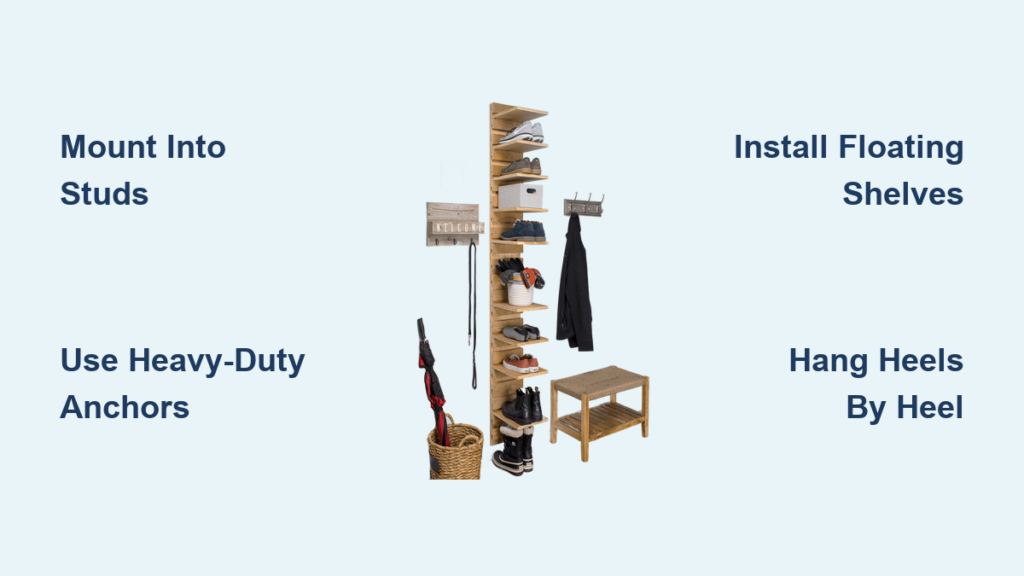
Floating shelves create a sleek, modern look with hidden brackets or French cleats that make them appear to hover on the wall. Materials include solid wood, high-grade MDF, or burnt wood (Shou Sugi Ban).
Mounting requires stud anchoring or heavy-duty drywall anchors. Because they rely on concealed supports, precise leveling is essential to prevent tilting under load. A minimalist floating rack on sale for $110.61 (originally $276.52) offers huge savings at 60% off.
Build Creative DIY Wall Shoe Racks

Pallet-Based Shoe Storage
Upcycled wooden pallets make rugged, rustic wall racks ideal for mudrooms or garages. This low-cost, high-impact build works perfectly for outdoor or high-moisture areas when sealed properly.
Steps for building your pallet rack:
- Clean and sand the pallet thoroughly
- Mount vertically or horizontally using 2.5-inch screws into studs
- Add crates or baskets for small items like polish or insoles
Capacity ranges from 6 to 12+ pairs, including knee-high boots. One user called their completed pallet project “the best solution for long-time clutter.”
Tree Branch or Log Racks
Natural wood branches or sliced logs add organic charm to entryways. Use thick, straight branches such as birch or maple, then mount horizontally with heavy-duty brackets.
This design works best for hanging shoes by the heel—ideal for flats and sandals. The aesthetic fits rustic, cabin, or Scandinavian interiors perfectly.
Pipe and Metal Frame Builds
Industrial-style racks made from black iron pipes or steel offer durability and modern flair. Components include pipes, flanges, and threaded connectors mounted to the wall with pipe straps or flange plates.
These are popular in lofts and apartments for their modular, customizable layouts. You can extend them vertically or add side hooks for bags or scarves. The Black Metal Pipe Hanging Shoe Rack holds 6 pairs per set.
Space-Saving Hacks for Apartments
Behind-Door Storage Solutions
Maximize unused space by installing slim storage on the back of entry doors. Options include adhesive Command hooks with a curtain rod, fold-down wire shelves, or over-door shoe organizers with clear pockets.
This solution is renter-friendly and instantly adds 6 to 12 pairs of storage without altering walls. Best for apartments, dorms, or small hallways. Note: not suitable for heavy boots.
Over-Heater Shoe Racks
Install a narrow rack above a baseboard heater with caution. Maintain at least 6 inches clearance above the heater and use metal or heat-resistant wood. Avoid blocking airflow to prevent fire hazards.
Only attempt this if the rack doesn’t interfere with heat distribution. It’s best for lightweight shoes like slippers or loafers.
Crown Molding Heel Hangers
Repurpose ceiling crown molding as a wall-mounted rail for heels. Mount horizontally with screws into studs, then hang shoes upside down by the heel.
Users call this “the best way to store heels” because it keeps them visible and dust-free while blending into trim work for a built-in look.
Install Curtain Rod Heel Racks on a Budget
Use Affordable Curtain Rods
A budget-friendly hack involves mounting a $3 Home Depot curtain rod horizontally on the wall. Rod type can be standard tension or screw-in curtain rod.
Reinforcement: Add a center bracket to prevent sagging. Install rods 6 to 8 inches apart for multiple rows. This method works best for heels, flats, and sandals. One DIYer reported hanging 20+ pairs using this method.
Upgrade with Shower Rods
For heavier loads, use a shower curtain rod instead—it’s sturdier and less prone to bending. Diameter is 1.5 inches versus 1 inch for standard rods.
Mount both ends and center with wall anchors. Ideal for boot heels or wider sandals, this version supports more weight and lasts longer in high-traffic areas.
Select Durable Materials for Long Use

Solid Wood vs. Plywood Options
Wood offers warmth and durability, but choice matters for your specific needs. Solid pine or hardwood is best for DIY racks—strong and easy to stain. Plywood is cost-effective; use with edge banding for a clean finish.
Burnt wood (Shou Sugi Ban) provides a weather-resistant, rustic look. Finish with polycrylic or varnish to protect against scuffs and moisture, especially in mudrooms.
Metal and Wire Advantages
Metal racks dominate commercial models for strength and airflow. Material is powder-coated steel or iron. The open design allows air circulation, reducing odor—ideal for gym shoes or rainy climates.
Models like the Wall Mounted Black Metal Wire 9-Pair Rack ($71.99) and 18 Pair Industrial Organizer ($102.99) are easy to wipe clean and resist warping. Perfect for garages or entryways with wet shoes.
Upcycled and Unusual Materials
Think beyond standard builds. Skateboard decks mounted vertically make quirky shoe displays. Vintage cobbler racks (antique ladder-style units) add retro charm. Crates combined with pallets create modular, tiered storage.
These ideas stand out in creative homes and add personality to otherwise utilitarian spaces.
Mount Your Rack Safely and Securely
Anchor Into Wall Studs
The golden rule is always mounting into studs when possible. Use a stud finder to locate framing, mark positions with painter’s tape, and secure with 2.5-inch screws for wooden racks.
Studs provide the strongest support, which is critical for racks holding 20+ pairs. Even lightweight racks can pull out over time without proper anchoring.
Use Heavy-Duty Anchors When Needed
No studs available? Use drywall anchors rated for 50+ lbs. Options include toggle bolts, snap toggles, or W-anchors.
W-anchor method: drive screw through upright until tip marks wall, drill hole and insert anchor, then reattach with screw. Avoid standard plastic anchors—they can pull out under load.
Apply Proper Fastening Techniques
Use three screws per shelf (top, center, bottom). Pre-drill holes to prevent wood splitting. For floating shelves, use French cleats or routed wall channels.
Test stability by gently pressing down before loading with shoes.
Optimize Storage for Specific Rooms
Entryway and Hallway Racks
The most common location manages daily footwear efficiently. Best picks include the White Metal 18-Pair Entryway Organizer (clean, high-capacity) and the Narrow Wall Shoe Rack ($117) for tight spaces.
Pair with hooks for coats and a key tray for a complete entryway system. Choose styles that match your home’s aesthetic—industrial, modern, or rustic.
Mudroom and Garage Storage
These high-traffic zones need durable, easy-to-clean solutions. Preferred materials are metal, wire, or sealed wood. Features should include open design for drying and elevated base to avoid puddles.
One user built a garage rack in 3 to 4 hours using pine and basic tools—durable and custom-fit.
Bedroom and Closet Displays
For fashion-focused storage, prioritize visibility and style. Ideas include slanted shelves for sneaker collections, crown molding rails for heels, and floating racks with LED lighting to highlight shoes.
Maximize narrow closet depths with vertical storage instead of floor piles.
Outdoor and Carport Use
Store wet or dirty shoes outside living areas. Materials should be treated wood, sealed metal, or plastic. Design should elevate off ground and include drainage if possible.
Keep mud and snow out of the house while maintaining easy access.
Shop Smart: Top Commercial Picks
Best Value: Modern Floating Rack
Price: $110.61 (originally $276.52)—60% off. Material is wood/MDF. Style is minimalist, entryway-ready.
This is the top choice for those who want a premium look without the premium price.
Most Affordable: Industrial Metal Racks
Price: $39.00 (35% off original $60.00). Options include Entryway 2 set open shoe rack and Entryway metal wall storage. Style is industrial, open shelving.
Ideal for budget builds, humid areas, and renters (with anchors). Multiple models available at this price point.
Premium Pick: Solid Wood Narrow Rack
Price: $117.00 (10% off). Material is solid wood. Use is for small entryways and tight hallways.
Benefit is durable, natural finish, and space-saving design. Worth the investment if you need a long-lasting, custom-fit solution.
Maintain and Extend Your Rack’s Lifespan
Care for Wooden Racks
Dust weekly with a soft cloth. Reapply finish every 1 to 2 years. In humid areas, seal with waterproof varnish. Outdoor units require annual sanding and resealing.
Proper maintenance ensures 5+ years of use.
Clean Metal and Wire Racks
Wipe with a damp cloth monthly. Check for rust in damp environments. Touch up chipped powder coating to prevent corrosion.
These racks last longer in garages or mudrooms when kept dry.
Replace Adhesive Hooks Regularly
Command hooks degrade over time. Replace every 6 to 12 months, especially in high-humidity areas. Not suitable for heavy or frequently used shoes.
Use only for lightweight footwear to avoid wall damage.
Match Your Style: Industrial to Minimalist
Industrial and Modern Looks
Features include exposed metal, raw wood, and pipe fittings. Colors are black, dark brown, or white. Products like Schuhregal metal or reclaimed custom shoe rack fit urban lofts and modern apartments.
Rustic and Farmhouse Aesthetics
Materials include reclaimed wood, pallets, and burnt wood. Finish is hand-sanded, natural, or stained. The Burnt Wood Wall Mounted Rack (Set of 2) at $36.99 adds warmth to mudrooms or country-style homes.
Minimalist and Floating Designs
Design features clean lines, hidden mounts, and neutral tones. Goal is maximizing space without visual clutter. Best for small apartments and contemporary entryways.
Floating racks disappear when empty—perfect for sleek interiors.
Frequently Asked Questions About Wall Shoe Rack Ideas
What is the best wall shoe rack for small apartments?
Narrow floating shelves or behind-door organizers work best for small apartments. The Narrow Wall Shoe Rack at $117 offers solid wood construction in a space-saving design. For budget options, use Command hooks with curtain rods—under $10 total and completely damage-free.
How do you mount a wall shoe rack safely?
Always mount into wall studs when possible. Use a stud finder to locate framing, mark positions with painter’s tape, and secure with 2.5-inch screws. If studs aren’t available, use heavy-duty drywall anchors rated for 50+ lbs. Test stability by pressing down before loading shoes.
Can I build a DIY shoe rack with pallets?
Yes, pallets make excellent DIY shoe racks. Clean and sand the pallet, then mount vertically or horizontally using 2.5-inch screws into studs. Add crates or baskets for accessories. Capacity ranges from 6 to 12+ pairs including knee-high boots. Seal properly for outdoor or high-moisture use.
What is the most affordable wall shoe rack option?
The industrial metal racks at $39.00 (35% off original $60) offer the best value. Multiple models are available including the Entryway 2 set open shoe rack and Entryway metal wall storage. These provide durability and ventilation at the lowest price point.
How do you store heels on a wall rack?
Use crown molding, curtain rods, or shower rods mounted horizontally. Hang heels upside down by the heel counter. Install rods 6 to 8 inches apart for multiple rows. This method keeps heels visible, dust-free, and maximizes closet space.
Are floating shelves strong enough for shoes?
Yes, when properly installed. Floating shelves require stud anchoring or heavy-duty drywall anchors. Use French cleats or concealed brackets for best support. Precise leveling is essential to prevent tilting under load. A properly mounted floating rack holds 6 to 10 pairs comfortably.
Key Takeaways for Wall Shoe Rack Installation
Wall shoe rack ideas are more than storage solutions—they’re smart design choices that save space, reduce clutter, and elevate your home’s look. Whether you choose a $39 industrial rack or build a custom pallet unit, the key is matching function to your lifestyle.
Prioritize secure mounting by always anchoring into wall studs or using heavy-duty anchors rated for 50+ lbs. Select durable materials based on your space—metal and wire for ventilation in mudrooms, solid wood for bedrooms, and weather-treated options for outdoor areas.
For renters or temporary situations, use damage-free solutions like Command hooks with curtain rods. For permanent installations, invest in floating shelves or built-in systems that complement your décor. With the right wall-mounted system, your shoes stay organized, protected, and ready to wear without taking over your floor space.