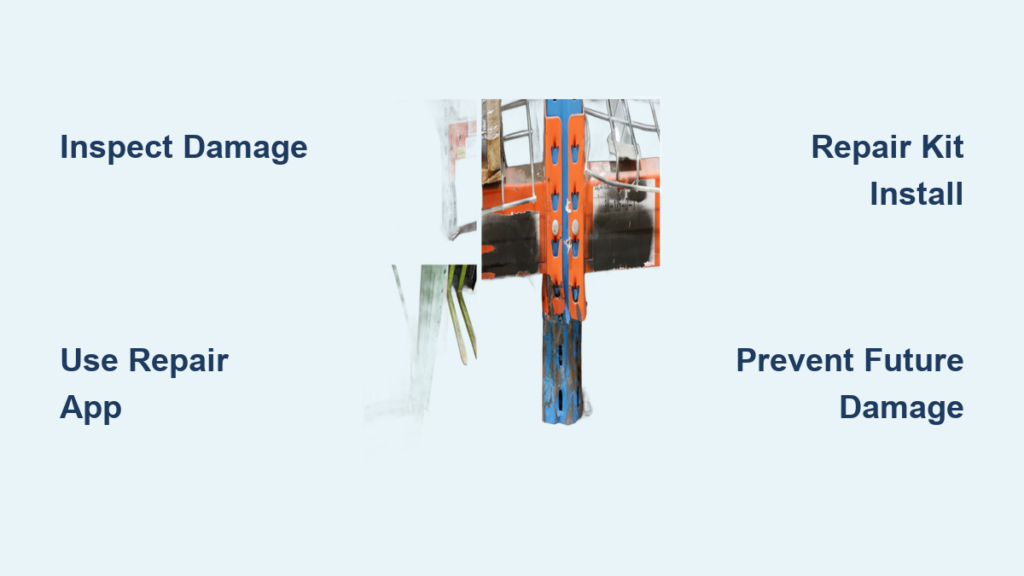

Every year, preventable rack failures lead to injuries, fatalities, and millions in losses. A bent column, a missing anchor, or an overloaded beam can become a ticking time bomb in your warehouse. With forklift impacts causing 90% of rack damage and OSHA citing facilities under the General Duty Clause for unsafe storage, warehouse rack safety is not optional. This guide delivers actionable insights from OSHA and ANSI/RMI standards to help you prevent collapses, ensure compliance, and protect workers before disaster strikes.
Follow OSHA & ANSI Compliance Rules for Rack Safety
Understand OSHA’s General Duty Clause
OSHA does not have a dedicated rule for pallet racking, but it uses the General Duty Clause to cite facilities with unsafe racks. If a hazard is recognized, likely to cause death or serious harm, and preventable, OSHA can issue fines even without a specific standard. Damaged columns, unsecured beams, or forklift-damaged uprights all qualify as violations. Ignoring visible damage constitutes a willful violation, and penalties can exceed $15,000 per incident. Documented inspections, repairs, and training prove due diligence and protect your facility during audits.
Apply ANSI/RMI MH16.1 Standards
The ANSI/RMI MH16.1-2012 standard is the gold benchmark for warehouse rack safety. It defines uniformly distributed load capacity calculations, maximum beam deflection under full load (typically L/180), frame plumbness tolerance (½ inch per 10 feet of height), and seismic design requirements for earthquake-prone zones. Racks not built or maintained to these specifications risk structural failure. Use this standard to validate new installations and assess existing systems against industry benchmarks.
Meet Fire Code Clearance Requirements
State fire codes based on NFPA 230 and NFPA 231 require a minimum 18-inch clearance between stored materials and sprinkler heads. This ensures sprinklers activate effectively and suppress fires before they spread. Violations block water dispersion and increase fire risk significantly. Inspect clearance monthly, especially after re-stocking. Additional fire safety requirements include separating flammable and oxidizing materials, limiting storage height by commodity class, and keeping fire lanes and hose access routes unobstructed.
Inspect Warehouse Racks Regularly and Correctly
Set the Right Inspection Frequency
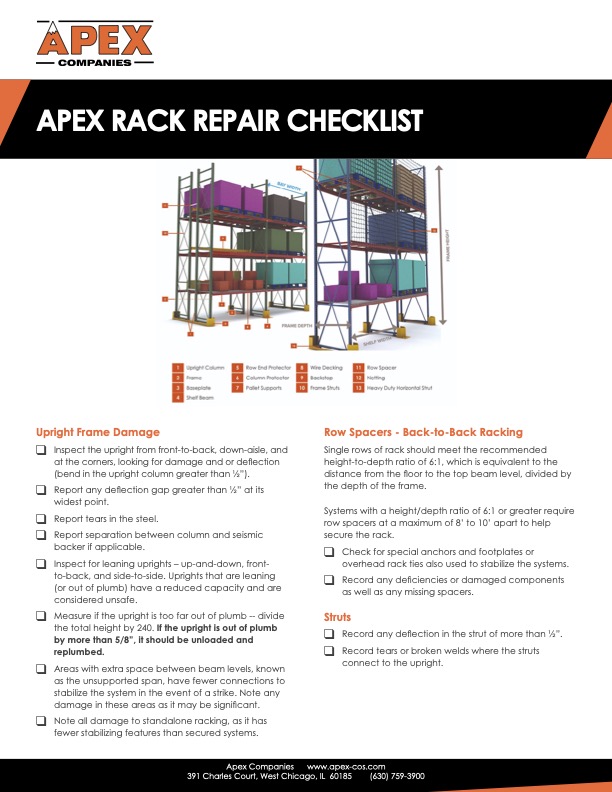
No OSHA-mandated schedule exists for rack inspections, but industry best practices establish clear guidelines. Annual inspections represent the minimum for all warehouses. Quarterly inspections are required in high-traffic areas or if prior damage occurred. Post-impact checks must happen immediately after any forklift collision. Inspections are also necessary after any modifications, reconfiguration, added levels, or load changes. High-volume distribution centers should inspect every 90 days. Document every check thoroughly because records protect you during OSHA audits and insurance reviews.
Check These 10 Critical Structural Components
Focus your inspections on these key areas to identify warehouse rack safety hazards before they cause failures.
Column Damage Beyond Acceptable Limits: Any bend, buckle, or deflection over ½ inch renders a column unsafe. Even minor dents weaken load paths significantly. Use a straight edge or laser level to measure deviation accurately. Tag and unload affected sections immediately.
Missing or Loose Anchors: Both front and rear floor anchors must be present and tight. Missing anchors increase tipping risk by 70%. Check for cracked concrete or sheared bolts. Re-anchor using manufacturer-approved hardware only.
Beam and Load Lock Integrity: Look for sagging or twisted beams, missing or broken beam safety pins, and cracked welds or deformed load locks. A loose beam can shift under load and trigger collapse. Replace damaged parts with OEM components to maintain structural integrity.
Frame Plumbness Over Tolerance: Measure vertical alignment down-aisle and cross-aisle. If the frame leans more than ½ inch per 10 feet, it is unstable. For a 20-foot rack, that is 1 inch maximum deviation. Use a plumb bob or digital inclinometer for accurate measurements.
Decking and Pallet Stop Condition: Wire decking must be secure with no sagging, exposed sharp edges, or holes or missing sections. Pallet stops prevent overhangs that cause falling loads. Replace missing or bent stops immediately.
Prevent Forklift Impact Damage to Racks
Install Bollards and Column Protectors
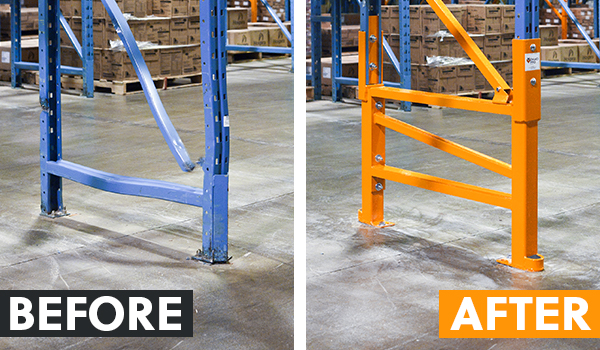
Uprights at aisle ends and corners are forklift magnets that sustain repeated impacts. Install steel or polyurethane bump guards on uprights to absorb collision energy. Place rubber or steel bollards at floor level to create a physical barrier. Use drive-in guide rails for deep-lane systems to keep forklifts properly aligned. These protective measures reduce repair costs by up to 60% and extend rack lifespan significantly. Replace damaged guards immediately rather than waiting for scheduled maintenance.
Use High-Visibility Markings
Make hazards impossible to miss with strategic visual cues. Paint rack end caps in yellow and black for immediate recognition. Use reflective tape on corners and columns to improve visibility in dim lighting. Mark pedestrian walkways with wide, durable floor tape that withstands heavy traffic. Add traffic mirrors at blind intersections and dock exits to improve operator awareness. Clear visual cues reduce forklift collisions with racks by 40% according to industry data.
Manage Loads Safely and Accurately
Never Exceed Load Capacity Ratings
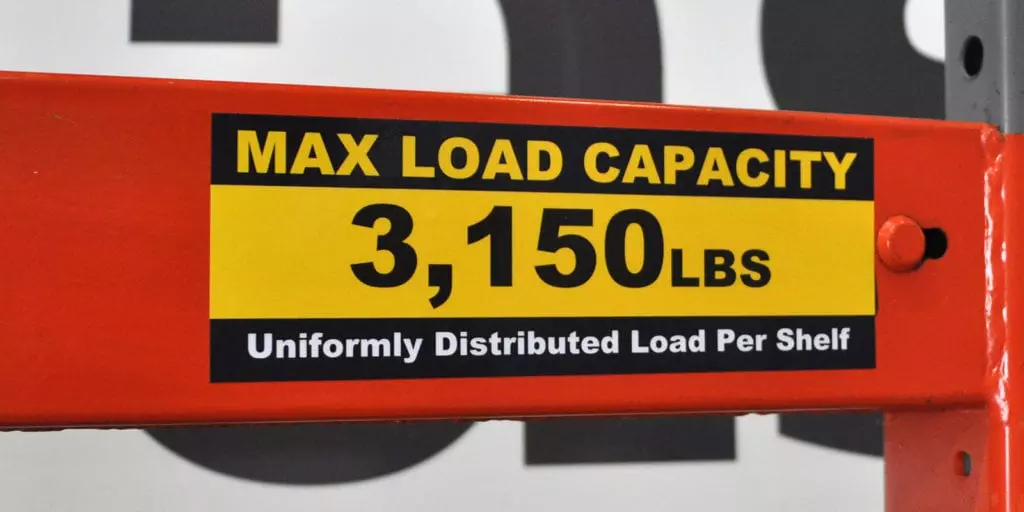
Overloading is the second-leading cause of rack failure. Each beam and upright has a rated capacity based on uniformly distributed weight. Never exceed these limits regardless of time pressure. A 6,000-pound load centered on a 7,200-pound-rated beam can fail due to point loading. Always distribute weight evenly across the entire beam surface to prevent concentrated stress that causes deflection or collapse.
Store Heavy Items on Lower Levels
Place heaviest loads on the lowest beams to lower the center of gravity and improve overall stability. Top-heavy configurations create pendulum effects during forklift operations, even when total weight remains within limits. This simple practice prevents countless tip-over incidents in warehouses every year.
Secure and Stack Loads Properly
Stack pallets straight and level to prevent shifting during forklift movement. Use interlocking patterns or cross-tying for loose goods that might spread under vibration. Secure loads with shrink wrap, banding, or netting to maintain integrity during handling. Never allow overhanging loads unless arms are specifically designed for that purpose. Unsecured loads shift during forklift movement and cause imbalance that leads to collapse.
Train Staff and Build a Safety Culture
Conduct Regular Safety Training
Effective training reduces warehouse incidents by 50%. Cover forklift operation including load center awareness, mast control, and turning radius awareness. Teach hazard recognition so workers can spot bent columns, missing anchors, and other warning signs. Implement a no-blame damage reporting policy that encourages transparency without fear of punishment. Review emergency procedures including evacuation routes and assembly points. Retrain all personnel annually and after any incident to maintain awareness.
Enforce PPE Requirements
All warehouse personnel must wear hard hats, high-visibility vests, safety-toe footwear, and safety glasses. Add hearing protection in noisy areas exceeding 85 decibels. Provide wearable blinkers for workers in low-light zones. PPE saves lives during falling object events and protects workers from secondary hazards throughout the facility.
Install Protective Safety Systems
Use Safety Netting for Fall Protection
Install vertical or horizontal safety netting to catch falling objects and protect workers below. Choose netting by impact capacity based on your storage configuration. Five hundred foot-pound capacity netting handles small packages and loose items. Six thousand foot-pound capacity netting contains full pallets that dislodge during operations. Common installation locations include above conveyor lines, behind back beams, and along mezzanine edges. Safety netting reduces falling object injuries by 80% when properly installed.
Add Traffic Control Devices
Prevent pedestrian-vehicle collisions with floor markings for walkways and stop zones. Install warning signs at rack entrances and aisle crossings. Display speed limit indicators requiring 5 mph maximum in storage areas. Equip reversing forklifts with audible alarms. Segregate foot and forklift traffic wherever possible to eliminate interaction zones entirely.
Maintain Equipment and Infrastructure
Service Forklifts Proactively
A malfunctioning forklift increases collision risk and endangers operators and nearby workers. Follow a preventive maintenance schedule covering brakes and steering, mast chains and lift cylinders, and tires and load backrests. Verify all safety systems work, especially backup alarms and lights. Keep maintenance records to demonstrate due diligence during OSHA inspections.
Repair Damaged Flooring Immediately
Cracked or uneven floors cause forklift jolts, misalignment, and tipping that damages racks. Inspect flooring daily in high-traffic areas. Repair potholes or spalling concrete immediately using appropriate materials. Uneven surfaces contribute to 25% of rack impacts according to industry incident data. Maintain floor conditions proactively rather than reacting to failures.
Inspect Conveyors for Safety
Conveyors near racks create pinch points and entanglement risks that threaten worker safety. Check guarding on all moving parts during regular inspections. Verify emergency stop buttons function correctly. Ensure lockout/tagout compliance before any maintenance or cleaning. Train workers on safe cleaning procedures that never involve bypassing guards.
Track Damage and Repair Correctly
Tag and Unload Damaged Sections Immediately
When damage is discovered during inspection, act immediately to prevent collapse. First, unload the affected bay completely. Second, barricade the area with tape or cones to prevent entry. Third, tag the section with a Do Not Use sign. Fourth, report to maintenance or safety manager for expedited repair. Delayed action allows continued operation that risks catastrophic failure and worker injury.
Repair vs. Replace: Make the Right Decision
Repair is often cheaper than replacement, but only when done correctly. Replace bent uprights with manufacturer-approved parts to maintain engineering certifications. Install reinforcement sleeves for minor column damage that does not exceed structural limits. Re-anchor loose footplates using proper torque specifications. Never weld or modify racks in-house because unauthorized repairs void certifications and create weak points that fail under load. All repairs should be engineer-approved, and third-party services like REB Storage Systems provide certified fixes that meet ANSI/RMI standards.
Avoid Common Rack Failure Causes
Stop Overloading and Point Loading
Overloading stresses beams beyond design limits and causes catastrophic failure. Point loading places heavy items in the center of beams and creates uneven deflection that compromises structural integrity. Use load charts provided by rack manufacturers and update capacity labels when product mix changes. Train all loading personnel on proper weight distribution techniques.
Prevent Unauthorized Modifications
Cutting beams, removing braces, or adding shelves without engineering review compromises structural integrity permanently. Enforce a strict no-modification policy unless approved by a licensed engineer. Any reconfiguration requires formal structural analysis to ensure load paths remain intact. Unauthorized modifications void warranties and create liability exposure.
Control Environmental Damage
Moisture, chemicals, and corrosion weaken steel over time and reduce load capacity silently. In cold storage or chemical zones, use corrosion-resistant coatings on all rack components. Inspect for rust at weld points and base plates during every inspection. Replace pitted or weakened components before they fail under load. Environmental damage is particularly insidious because it progresses slowly and becomes invisible to casual observation.
Document Everything for Compliance
Keep Detailed Inspection Records
Maintain logs showing date and inspector name, damage found and location, corrective actions taken, and repair completion dates. OSHA and insurers require these records during audits. Digital checklists improve accuracy and create searchable databases that simplify compliance reporting. Keep records for minimum three years to satisfy potential legal requirements.
Label Every Rack Bay Clearly
Each bay must display a legible load capacity plaque. Include maximum beam load in pounds or kilograms, upright capacity, and date of last inspection. Update labels after any reconfiguration because outdated signs are misleading and dangerous. Clear labeling prevents overloading and provides quick reference during emergency response.
Frequently Asked Questions About Warehouse Rack Safety
How Often Should Warehouse Racks Be Inspected?
Industry best practice recommends annual inspections as a minimum baseline. High-traffic facilities with frequent forklift operations should inspect quarterly. Always conduct post-impact inspections immediately after any known or suspected collision, regardless of visible damage. Additional inspections are necessary after rack modifications, natural disasters, or changes in stored product weights.
What Are the Most Common Causes of Rack Failures?
The most common causes include forklift impacts that damage columns and uprights, overloading beams beyond rated capacity, improper installation with missing components or incorrect anchoring, unauthorized field modifications, and delayed repairs that allow minor damage to escalate. Environmental factors like corrosion also contribute to failures over time.
Can I Repair Damaged Rack Components Myself?
No. Never weld or modify racks in-house because unauthorized repairs void certifications and create weak points. All repairs must use manufacturer-approved parts and be supervised by a qualified rack design engineer. DIY fixes fail to restore original load capacity and create liability exposure during OSHA inspections or incident investigations.
What Is the Minimum Clearance Required for Fire Sprinklers?
Fire codes require a minimum 18-inch vertical clearance between the top of stored materials and fire sprinkler heads. This ensures sprinklers activate properly and suppress fires effectively. Measure and maintain this clearance after every re-stocking operation.
How Do I Calculate Load Capacity for My Racks?
Load capacity depends on beam span, upright strength, and distribution pattern. Refer to ANSI/RMI MH16.1-2012 standards for calculation methods. Manufacturer specifications provide rated capacities based on uniformly distributed loads. Never exceed these limits, and distribute weight evenly across beams to prevent point loading failures.
Key Takeaways for Warehouse Rack Safety Success
Warehouse rack safety hinges on proactive inspection, strict load control, and a culture of accountability. A single bent column can trigger a collapse that injures workers, destroys inventory, and shuts down operations for weeks. By following OSHA guidelines, adhering to ANSI/RMI standards, training staff consistently, and investing in protective systems like bollards and safety netting, you prevent disasters before they happen. Make rack safety part of your daily routine rather than an afterthought. Conduct professional inspections annually at minimum, document all findings, repair damage immediately using certified methods, and maintain clear load capacity labels on every bay. Your team depends on your commitment to safety, and the investment pays dividends in reduced injuries, lower insurance costs, and uninterrupted operations.