
A cluttered entryway or overflowing closet? You’re not alone. Millions of homeowners struggle with disorganized footwear, but the solution is simpler than you think. A well-designed wood shoe rack combines durability, style, and smart storage to keep your space tidy and functional. Whether you’re working with a tiny apartment hallway or a spacious mudroom, wood offers unmatched versatility. From rustic reclaimed builds to sleek modern units, there’s a design for every home and budget.
This guide explores proven wood shoe rack ideas that maximize space, enhance decor, and stand the test of time. You will discover designs suited for every room, the best materials for your needs, DIY construction tips, and maintenance advice. Whether you’re shopping for a ready-made rack or building your own, these ideas will help you create the perfect storage solution.
Freestanding Wood Shoe Racks for Entryways and Living Spaces
Freestanding racks offer flexibility and strong visual impact without requiring wall modifications. They work in entryways, bedrooms, and mudrooms where floor space allows.
Multi-Tier Vertical Designs
Stacked shelves make the most of unused vertical space. A five-tier or seven-tier wood shoe rack can store up to twenty pairs in less than a square meter.
• Ideal for families needing high-capacity storage
• Common dimensions: 75 to 100 centimeters wide, 94 to 150 centimeters tall, 25 to 30 centimeters deep
• Shelf spacing: 7 inches between tiers; 16 inches from floor to first shelf for boots
• Pro tip: Alternate heel-to-toe arrangement saves 2 to 3 inches per shelf
Industrial-Style Wood and Metal Racks
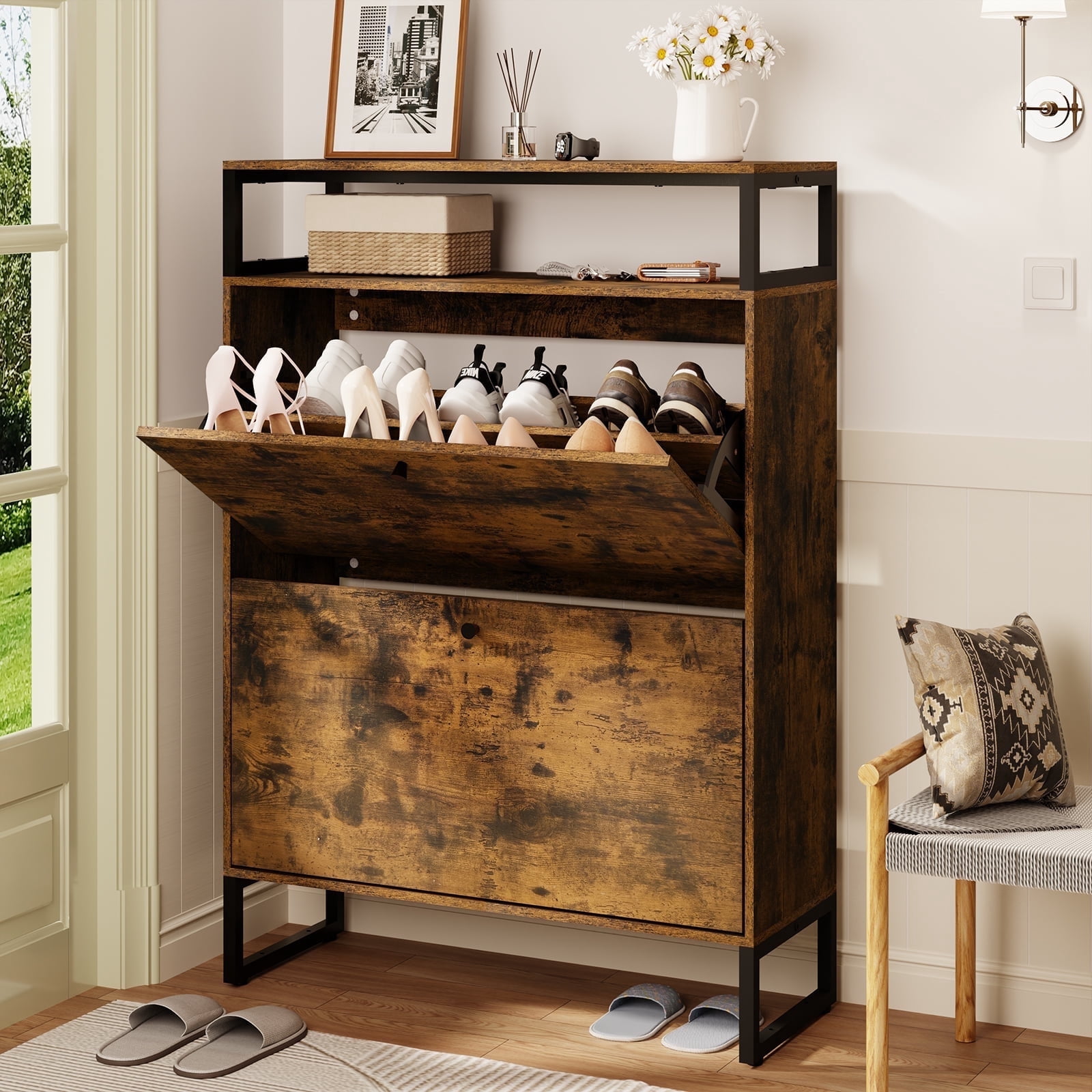
Combine wood shelves with iron frames or brackets for an edgy, urban look. These racks feature exposed bolts, angular supports, and raw finishes. They use reclaimed wood or rough pine with black metal legs, offering high durability ideal for garages or high-traffic areas.
Rustic Ladder-Style Racks
Sloped or stepped shelves mimic a ladder, creating an eye-catching display. Made from rough-sawn or reclaimed wood, these racks hold 6 to 10 pairs. Each piece is unique due to natural wood grain and texture, making them best for farmhouse, cabin, or bohemian interiors.
Pallet-Based Shoe Racks
Repurpose wooden pallets into budget-friendly, eco-conscious storage. Disassemble, sand, and reassemble into vertical or wall units. Avoid chemically treated pallets and use only heat-treated wood. This DIY-friendly approach costs often under $20 and delivers rustic charm.
Wall-Mounted Wood Shoe Racks That Save Floor Space
Save floor space with wall-mounted designs, perfect for narrow hallways, apartments, and small homes.
Floating Wall Shelves
Mount individual or staggered shelves directly to studs or with heavy-duty brackets. Shelf depth should be 15 to 25 centimeters. Angled or stepped placement improves shoe visibility. These work best for lightweight shoes like flats, loafers, or sneakers.
Hidden Shoe Storage Units
Integrate racks into cabinetry or behind doors for a seamless look. Examples include lift-up bench seats and hidden shoe cabinets. These protect shoes from dust and maintain minimalist decor, making them best for bedrooms or walk-in closets.
X-Shaped Multi-Layer Racks
Crisscross wooden or metal frames support staggered shelves. This design offers high visual interest with open airflow and sturdy construction. It holds 8 to 12 pairs depending on spacing, popular in modern and industrial-style homes.
Wood Shoe Bench Combos for Dual Functionality

Merge seating with storage, perfect for removing shoes at the door.
Storage Bench with Lift-Up Seat
Dual-purpose design ideal for entryways and mudrooms. The lift-up lid reveals a hidden compartment for 4 to 6 pairs. The top surface doubles as a seat or display area for bags, keys, or gloves. Use teak or sealed plywood in humid climates.
Bench with Open Shelving Underneath
Open slats or shelves beneath the seat allow quick access. This design accommodates boots, cleats, and skats. It is easy to clean with no enclosed dust traps. Minimum shelf height of 16 inches accommodates tall footwear.
Bench with Enclosed Cabinet
Features doors or drawers for concealed, organized storage. This keeps clutter out of sight and can include adjustable shelves for varying shoe heights. Use soft-close mechanisms to prevent slamming.
Space-Saving Designs for Small Apartments
Maximize small spaces with slim, vertical, or mobile solutions.
Narrow Slim Shoe Cabinets
Fits beside doors, in closets, or tight hallways. Width ranges from 20 to 30 centimeters with height up to 94 centimeters. Stores 4 to 6 pairs in minimal footprint. Paint in neutral tones to blend with walls and reduce visual bulk.
Underbed Wooden Shoe Trays
Low-profile wooden bins slide under beds. Ideal for seasonal or dress shoes. Use hardwood rails or casters for smooth glide. Keep height under 15 centimeters to fit most beds. Label trays for easy identification.
Rolling Wooden Shoe Bins
Mobile carts on casters offer flexible storage. DIY with pine or plywood frame plus wheels. Move between bedroom, closet, or entryway as needed. Locking casters prevent unwanted movement.
Modern and Decorative Wood Rack Options
Style meets function in aesthetic-focused designs.
Minimalist Wooden Racks
Clean lines, hidden fasteners, and light wood tones define this style. Uses maple, birch, or teak with satin finishes or clear lacquer. Fits modern, Scandinavian, or Japandi interiors. Avoid visible screws by using pocket holes or mortise and tenon joints.
Luxury Handmade Wood Racks
Crafted from exotic or stained hardwoods. Features purple heart, ambersia maple, or walnut. Marketed as artisan furniture rather than basic storage. Use UV-protective finish to preserve vibrant colors.
Bamboo Shoe Racks
Sustainable, moisture-resistant alternative to solid wood. Naturally resists warping and mildew. Lightweight yet strong, ideal for humid climates. Choose FSC-certified bamboo for eco-conscious builds.
Best Wood Types for Durability and Style

Material choice affects durability, cost, and appearance.
Pine: Budget-Friendly and Easy to Work With
Softwood prone to dents but affordable. Rough pine adds rustic charm; finish with mineral oil. Best for indoor, low-traffic areas. Sand thoroughly to avoid splinters.
Plywood: Stable and Warp-Resistant
Three-quarter-inch thick plywood is strong and consistent. Avoid MDF which swells with moisture unless sealed with oil-based primer. Ideal for modern, clean-lined designs. Use hardwood plywood for visible surfaces.
Teak: Premium and Weather-Resistant
Naturally water-repellent, great for mudrooms or outdoor use. Ages to silver-gray if untreated. Expensive but long-lasting. Perfect for high-moisture environments.
Reclaimed and Pallet Wood: Eco-Friendly and Unique
Each piece has character from prior use. Requires sanding, cleaning, and sealing. Ideal for rustic, industrial, or farmhouse styles. Inspect for nails, rot, or chemical treatments before use.
Strong Joinery Techniques for DIY Builds
Build a durable rack with professional-grade connections.
Mortise and Tenon Joints
High-strength joint for premium builds. Use Forstner bit and chisels for precise mortises. Bevel tenons to fit flush with rails. Requires sharp tools, dull blades burn hard woods like purple heart.
Pocket-Hole Joinery
Fast, strong, and DIY-friendly. Uses 1¼-inch pocket screws and jig. Three pocket holes per end recommended. Ideal for rectangular frames.
Cleat and Screw Method
Three-quarter-inch by three-quarter-inch wood cleats under shelves or tops. Prevent splitting with pilot holes and countersunk screws. Supports heavy loads and allows easy mounting.
Optimal Dimensions and Storage Capacity
Right sizing ensures maximum capacity and usability.
Standard Rack Dimensions
| Tiers | Height | Width | Depth | Pairs Stored |
|---|---|---|---|---|
| 3 | 60 to 90 cm | 75 to 100 cm | 25 to 30 cm | 6 to 9 |
| 5 | 94 cm | 75 cm | 30 cm | Up to 20 |
| 6 | 120 to 140 cm | 80 to 100 cm | 25 to 30 cm | 12 to 18 |
| 7 | 130 to 150 cm | 70 to 90 cm | 25 cm | 14 to 21 |
Shelf Spacing Guidelines
Floor to first shelf should be 16 inches to fit ski boots and cleats. Subsequent shelves spaced 7 inches apart at front, 9 inches at back for slight angle. Top shelf at 90 degrees for flat items like helmets or bags.
Finishing Options to Protect and Beautify Wood
Protect wood and enhance appearance with proper finishing.
Sanding Steps
Final hand sanding with 320-grit paper. Between coats use 1000-grit plus tack cloth. Always sand with the grain to avoid scratches.
Best Wood Finishes
Tung or mineral oil enhances pine grain and prevents drying. Satin lacquer protects color, especially on UV-sensitive woods. UV-protective finish locks in vibrant hues like purple heart. Apply thin, even coats in a ventilated area and lightly sand between layers.
Best Locations for Different Rack Styles
Match rack design to where it will be used.
Entryway and Foyer Racks
Bench-integrated models are most popular. Open shelving provides quick access. Use moisture-resistant wood like teak, bamboo, or sealed plywood. Top shelf works for helmets, gloves, or sports gear.
Bedroom and Closet Racks
Narrow cabinets or wall-mounted shelves work best. Focus on aesthetics with light woods and clean finishes. Underbed trays suit seasonal storage.
Small Apartments and Tight Spaces
Slim, vertical, or wall-mounted designs maximize every inch. Up to 16 pairs fit in compact footprints with smart layout and heel-to-toe placement.
Mudrooms and Outdoor Use
Avoid MDF and untreated pine. Choose teak, bamboo, or sealed plywood. Angled shelves promote airflow and drying. Ventilated designs prevent odor buildup.
DIY vs Store-Bought: Making the Right Choice
Weigh cost, effort, and customization to find what works best for you.
DIY Advantages
Custom size and layout for your specific space. Material control lets you choose eco-friendly or exotic woods. Lower cost with many builds under $50. Satisfaction of building it yourself. Best for woodworkers with basic tools.
Store-Bought Benefits
Immediate use with no assembly time. Consistent quality and finish. Warranty and support available. Wide price range from $20 mass-market to $2,000 artisanal pieces.
Maintenance Tips for Long-Lasting Racks
Keep your wood shoe rack looking great for years.
• Dust regularly with dry microfiber cloth
• Re-oil unfinished or oiled wood every 6 to 12 months
• Wipe spills immediately, do not let water sit
• Check screws and joints annually and tighten as needed
• Re-seal finishes if wood looks dry or faded
Avoid harsh cleaners and use mild soap and water only when necessary.
Frequently Asked Questions About Wood Shoe Rack Ideas
What is the best wood for a shoe rack?
Pine offers budget-friendly affordability. Plywood provides stability and warp resistance. Teak delivers premium weather resistance. Bamboo gives eco-friendly moisture resistance. Choose based on your budget, location, and aesthetic preferences.
How many pairs can a wood shoe rack hold?
A 3-tier rack holds 6 to 9 pairs. A 5-tier rack stores up to 20 pairs. A 7-tier rack accommodates 14 to 21 pairs. Capacity depends on shelf spacing and shoe arrangement method.
Are wall-mounted or freestanding shoe racks better?
Wall-mounted racks save floor space, ideal for small apartments and narrow hallways. Freestanding racks offer flexibility and work well in entryways and mudrooms. Choose based on available space and installation preferences.
Can I build a wood shoe rack myself?
Yes, DIY builds work well for woodworkers with basic tools. Pocket-hole joinery offers strong, accessible construction. Custom sizing and lower costs are major benefits. Start with simple designs like pallet racks or multi-tier shelves.
How do I maintain a wood shoe rack?
Dust regularly with a dry cloth. Re-oil wood every 6 to 12 months. Wipe spills immediately. Check and tighten screws annually. Re-seal finishes when wood appears dry or faded.
What is the ideal shelf spacing for shoe racks?
Floor to first shelf should be 16 inches for boots. Subsequent shelves need 7 inches at the front and 9 inches at the back. This slight angle improves visibility and prevents clutter.
Key Takeaways for Finding Perfect Wood Shoe Rack Ideas
A wood shoe rack is more than storage, it is a smart design solution combining function, durability, and style. Focus on quality materials like pine, plywood, teak, or bamboo based on your environment and budget. Choose designs matching your space, whether freestanding for entryways, wall-mounted for narrow hallways, or bench-integrated for dual functionality. From narrow hallway units to luxurious handmade cabinets, the right wood shoe rack idea keeps your home organized and your shoes in great condition for years to come.